Speakers
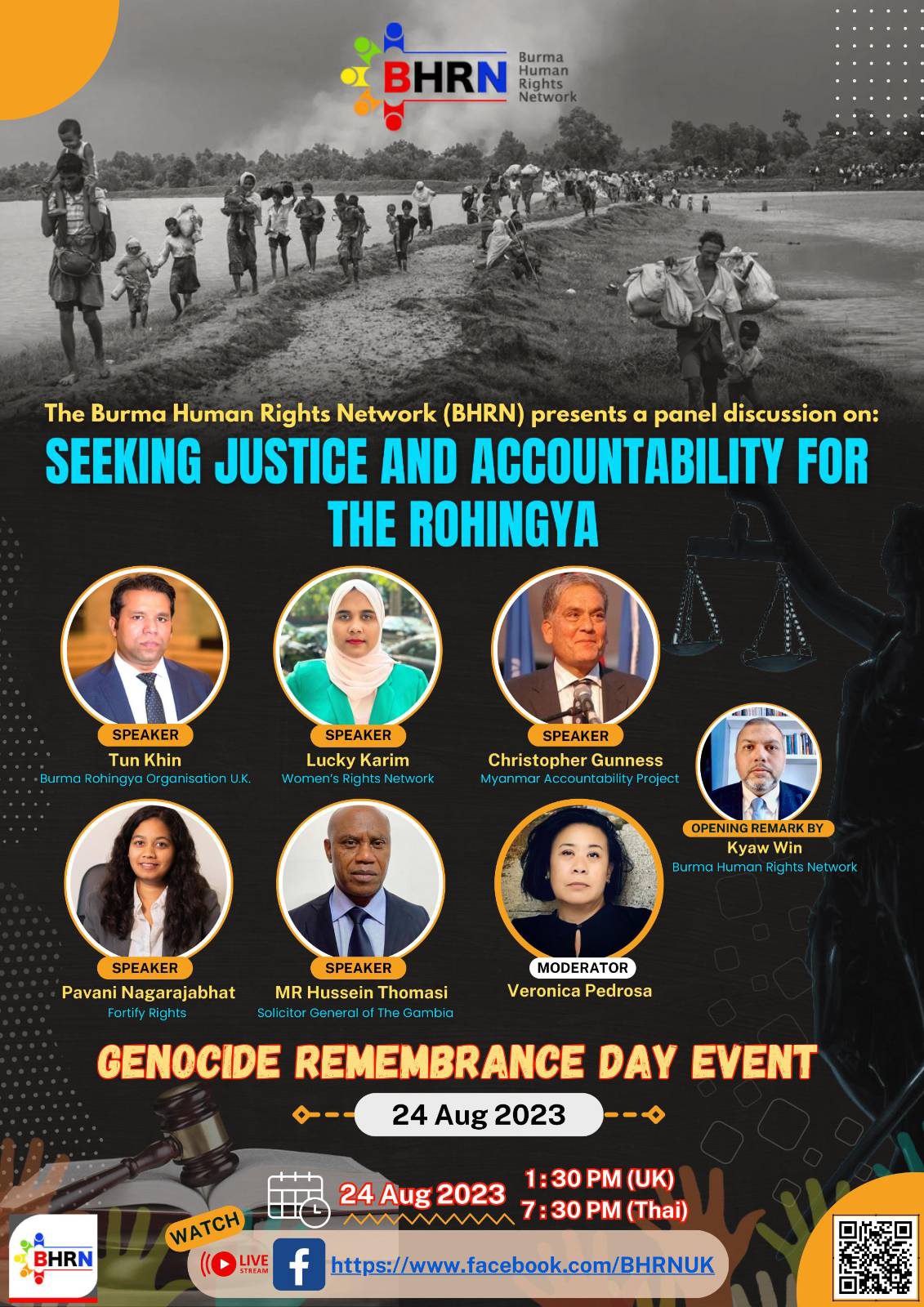
- Kyaw WinOpening remarks – Founder and Executive Director, Burma Human Rights Network
- Tun KhinPresident, Burmese Rohingya Organisation UK (BROUK) – the human rights situation in Rakhine State and BROUK’s genocide case in Argentina
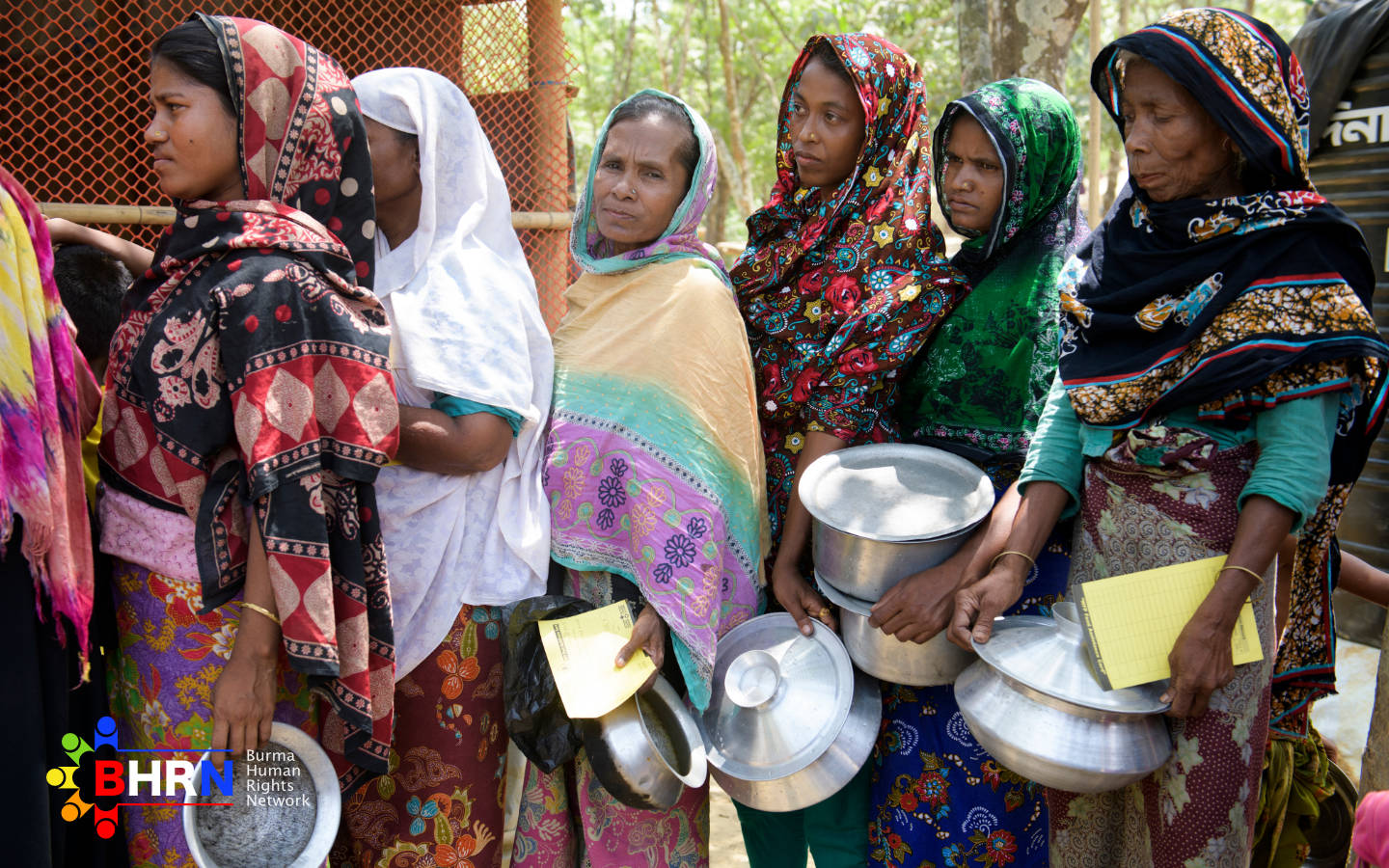
- Lucky KarimRohingya human rights defender – the situation of the Rohingya in Bangladesh
- Christopher GunnessDirector, Myanmar Accountability Project (MAP) – the criminal case filed in Turkey on torture since the 2021 coup
- Pavani NagarajabhatInvestigations Associate, Fortify Rights – the criminal complaint filed in Germany against Myanmar generals
- Hussein ThomasiSolicitor General of The Gambia – the genocide case against Myanmar at the International Court of Justice
- Veronica PedrosaModerator – Senior Interview Producer, Al Jazeera
Topics
- The human rights situation of the Rohingya in Bangladesh and post-coup Myanmar.
- Updates on the Gambia v. Myanmar genocide case at the International Court of Justice (ICJ) and other international justice mechanisms.
- Updates from the NUG on the appointment of a Rohingya representative and its plans to address the human rights of the Rohingya.
- Effective measures to end all human rights violations against Rohingya Muslims and other minorities in Myanmar.
Background
25 August 2023 marked six years since the Myanmar military led a campaign of killings, mass rape and arson against the Rohingya in northern Rakhine State, killing thousands and forcing over 730,000 to flee to Bangladesh. In the six years since, the situation for Rohingya in Myanmar and abroad offers a dismal reflection of justice delayed.
Nearly 600,000 Rohingya remain trapped in Rakhine State under a system of discriminatory laws and policies that amount to crimes against humanity and genocide. Since the attempted military coup on 1 February 2021, Rohingya have faced tightened restrictions on their fundamental freedoms.
Rohingya who have fled to Thailand, Malaysia, Indonesia or India live under the constant threat of arrest, detention and forced return. In Bangladesh, one million Rohingya refugees remain in sprawling camps in Cox’s Bazar District, where the government restricts their rights, including education and freedom of movement.
The coup has made clear that the ongoing atrocities are a direct consequence of a military that for decades has faced no consequences for its crimes. Efforts towards legal accountability are ongoing at the International Court of Justice (brought by The Gambia) and the International Criminal Court, and at national level in Argentina, Indonesia, Turkey and Germany.