1Executive Summary
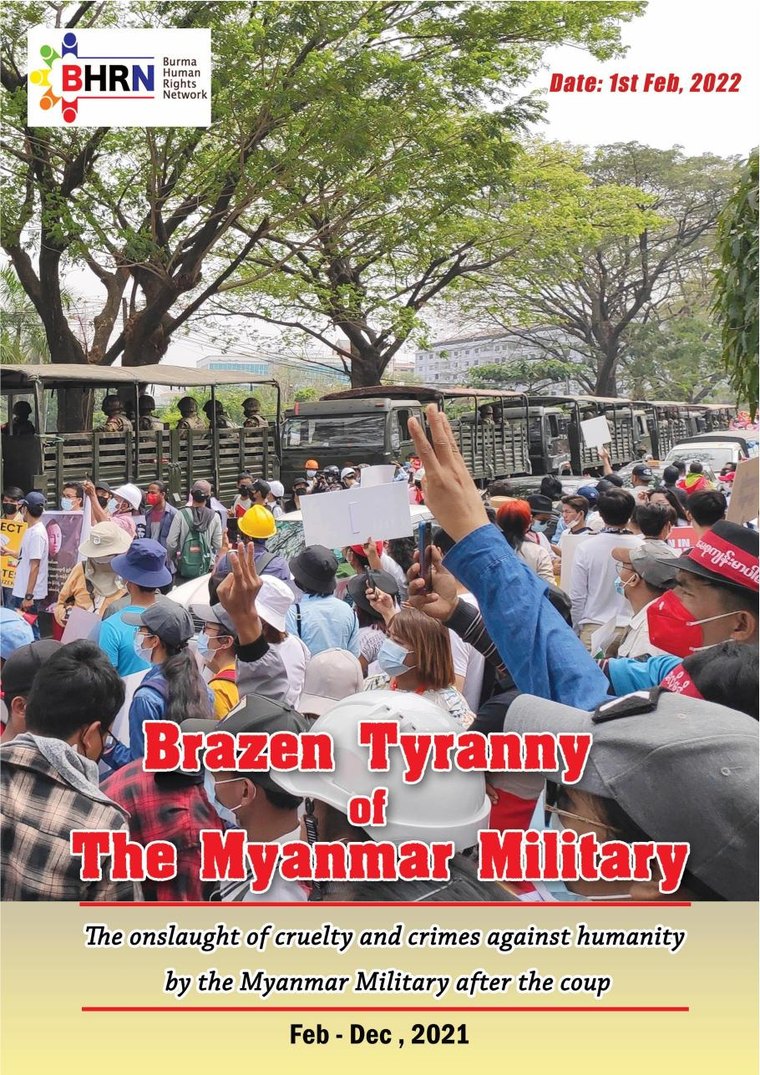
Myanmar is a country located in Southeast Asia, currently facing a military coup and resistance from the people. Since the 1 February 2021 coup, Burma Human Rights Network has documented the situation daily and reported on it monthly. Documentation by BHRN from February 1, 2021, to December 31, 2021, shows human rights violations and crimes committed by Military Junta are growing.
BHRN strongly believes that the Military Junta has committed crimes against humanity, as defined by the United Nations, by committing murder, extermination, enslavement, torture, rape, enforced disappearances, and persecution against political identity. The Myanmar Military Junta is committing this crime against humanity repeatedly.
This report presents and analyzes the documentation of daily crimes committed by the Myanmar Military Junta with the International Human Rights Standards. Action against the junta is urgently needed for crimes already committed and to protect the lives and safety of the Burmese people. BHRN recommends Individual and cooperative action against the Military Junta terror and support for humanitarian assistance to the Burmese people.
2Background
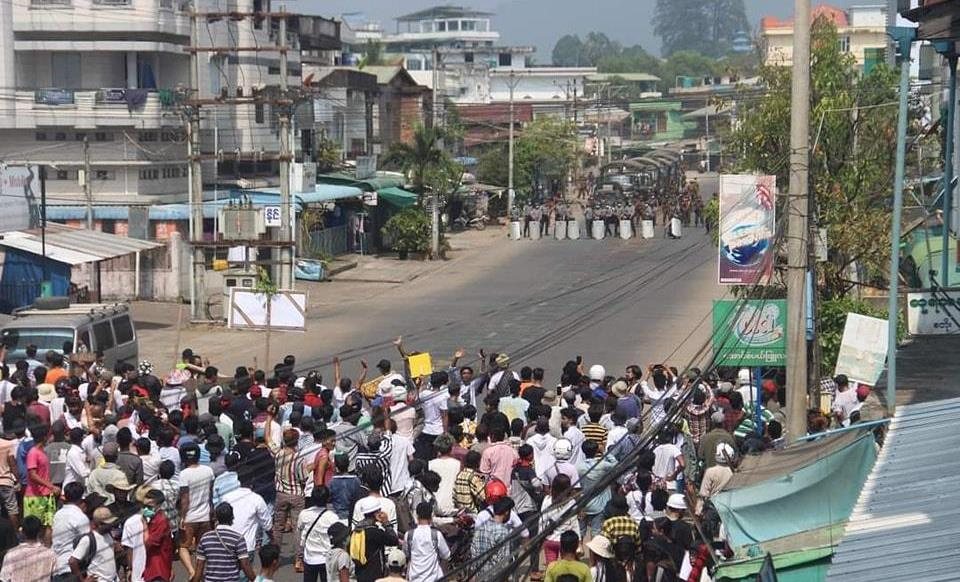
On Feb 1, 2021, Myanmar Military Junta announced a state of emergency and launched a coup to control the country. Since day one of the coup, several human rights and political activists were arbitrarily arrested and many remain in prison2. Even though the international community has denounced the action of the military junta, it does not stop their acts of terror toward civilians. The brutal crackdown on peaceful civilians started on 9 February 20213 which was noticed internationally and country wide. Before firing live ammunition at protesters, a car was rammed into a group of protesters in Mandalay on 8 February and4 one person died from their injuries. The car-ramming incident is similar to an act committed by the junta on December 5, 20215. From the beginning of the coup, peaceful protesters and unarmed civilians have been inhumanely killed by the junta, and BHRN has carefully documented the crimes committed by the Military junta.
Moreover, during the third wave of Covid 19 in Myanmar, around 100 people were dying on a daily basis without humanitarian assistance. The Myanmar Military is blocking critical humanitarian aid from reaching vulnerable populations and is not able to manage the health care officers who are joining the civil disobedience movement. Due to the failure of management, many civilians lost their lives in the third Covid wave.6
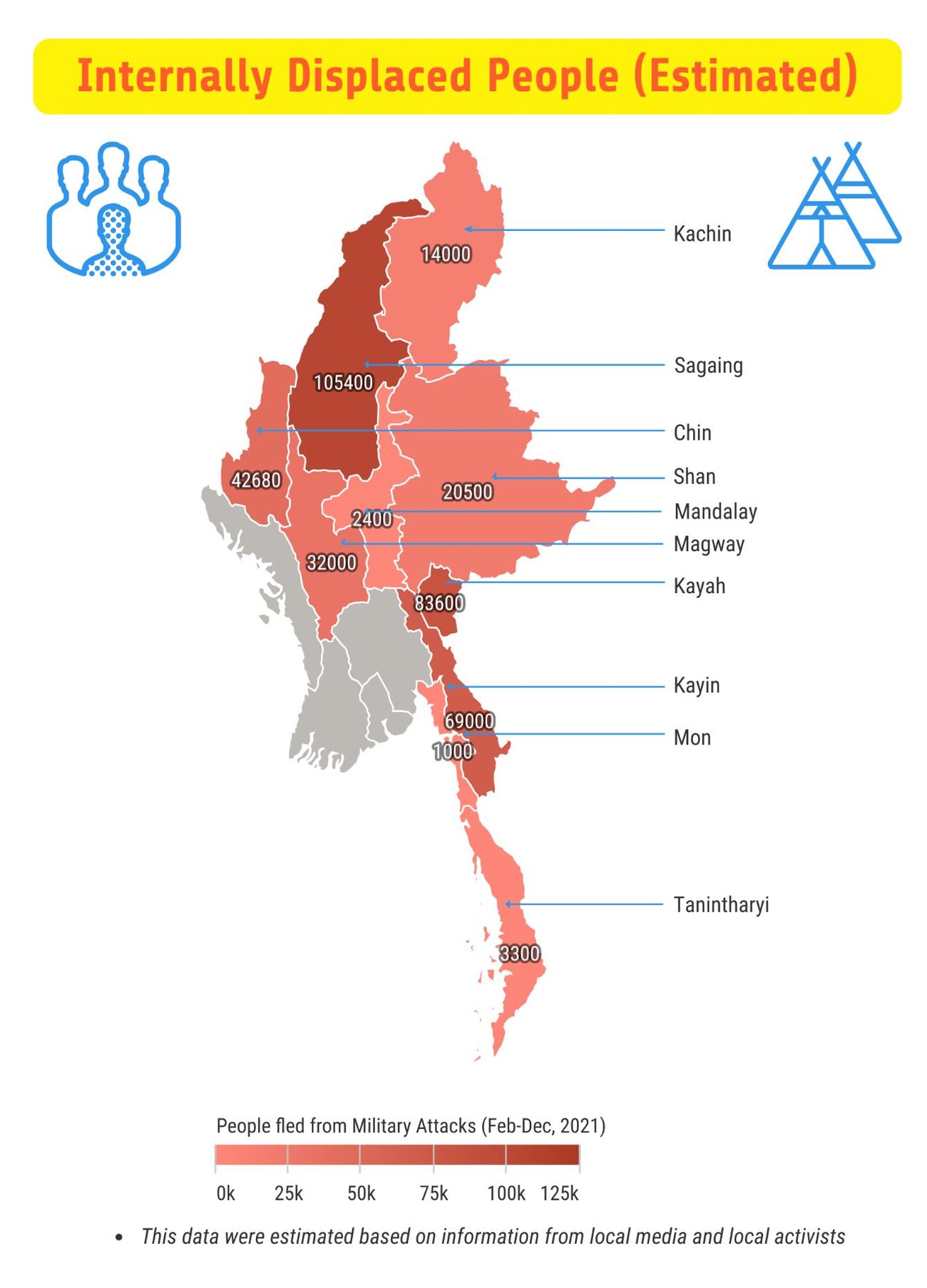
The brutal and cruel violence of the Myanmar Military is getting worse day by day and escalated to the point of burning villagers alive. The failure of the international community to take action against the Myanmar Military threatens the life and safety of civilians and will lead to civil war. As the UNHCR reported on January 17th of 2022, "a total of 405,700 displaced within Myanmar was recorded, as a result of armed conflict and unrest since 1 February 2021. This is an increase of 27% in just one month and the total now includes 217,900 internally displaced persons (IDPs) in South-East Myanmar – 91,400 in Kayah State, 42,600 in Shan State (South), 74,600 in Kayin State, 7,100 in Mon State, 1,600 in Tanintharyi Region and 600 in Bago Region; 7,500 in Shan State (North). In addition, there are 33,800 IDPs in Chin State, 20,100 in Magway Region, and 113,900 in Sagaing Region. Myanmar is becoming a failed state with uncertainty after one year of the coup."7
BHRN reported the situation and crimes committed by the Myanmar Junta after six months of a coup to recommend that the international community to take action. This report is mainly intended to reflect on the one-year situation of the coup in Myanmar and the resistance and rejection from the people of country. It demonstrates that the world must take action against the Myanmar Military, not only with denouncements and statements but with effective actions by the international community. According to the BHRN documentation, from February 1 to December 2021, about 1685 people were killed by the Military junta. These documents demonstrate that the junta has committed and will continue to commit crimes against humanity by risking all civilians' safety.
3Methodology & Limitation
Local BHRN team members who are currently based in Myanmar collected first-hand evidence-based data and also monitored social media platforms, online news channels, and offline news. Data were collected daily with relevant references and follow up on further case scenarios. The data on killings and arson attacks on villages are critically collected and given a data assessment. The data are carefully reviewed and analyzed by the BHRN senior research team members.
Despite this, there are some limitations due to violence, life-threatening situations, and time limitations. The complete list of people who were abducted and arbitrarily arrested by the Military Junta is difficult to collect data on as they are kept captive, or fear reprisal if they speak out after release.
4Introduction
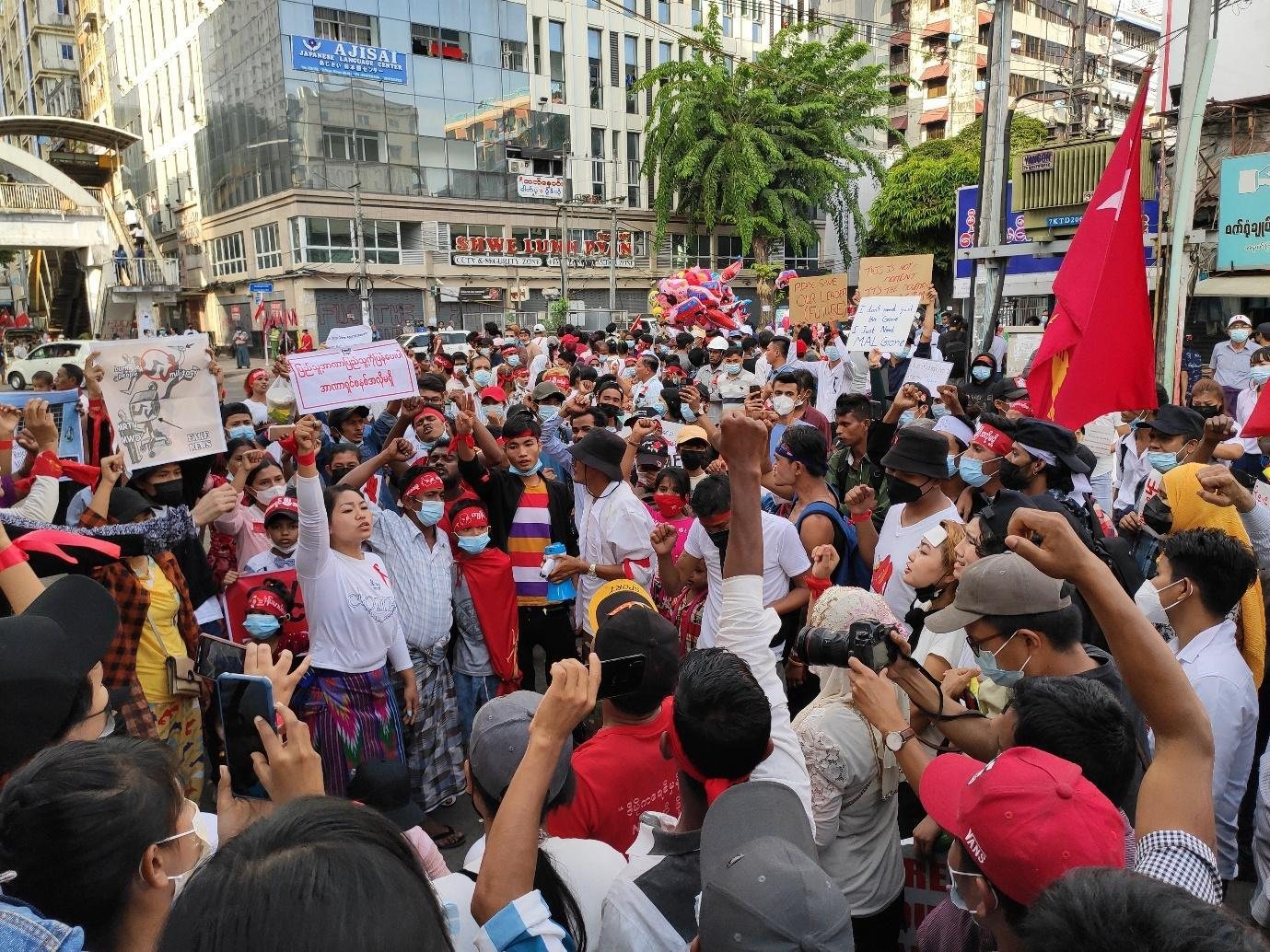
Since the 1 February coup, the international community has been horrified to see the oppression of civilians. Even though UN special rapporteur on human rights in Myanmar, Tom Andrews, called for the international community to take action against the Myanmar military, the denouncements and statements by the international community were ignored by the terror junta. The violence continued for the entire year following the coup, and there is no obvious way to restrain the junta’s violence.
Within a year of the coup, the resistance from the people of Myanmar is strong and continues going now. The people of Myanmar peacefully protested and showed their opposition by banging pots through February, March, and April. The world saw the brutal crackdown and violence against the peaceful protesters, and the military junta killed at least 890 people by the end of May 2021. The resistance from the People of Myanmar changed to protect themselves and fight back against the Military junta. This resistance emerged as the people's defense force (PDF), which was formed at the beginning of May 2021.
The clashes between the Myanmar military and PDFs, Ethnic Arms Group (EAOs) are headed to a full-blown civil war and have resulted in many civilians becoming refugees and internally displaced. Moreover, there is no cooperation from the military junta with the arm conflicts Hague Law and Geneva Law to protect victims and conduct hostilities. The international community is witnessing the inhumane acts of the military against unarmed civilians.
5Crime Against Humanity: Physical Elements
The Rome Statute of the Criminal Court, describes crimes against humanity as not ordinary crimes that are not linked to an armed conflict. “Article 7 (1) of the Rome Statute states the contextual elements of crimes against humanity acts as follows.
- Murder;
- Extermination;
- Enslavement;
- Deportation or forcible transfer of population;
- Imprisonment or other severe deprivation of physical liberty in violation of fundamental rules of international law;
- Torture;
- Rape, sexual slavery, enforced prostitution, forced pregnancy, enforced sterilization, or any other form of sexual violence of comparable gravity;
- Persecution against any identifiable group or collectivity on political, racial, national, ethnic, cultural, religious, gender as defined in paragraph 3, or other grounds that are universally recognized as impermissible under international law, in connection with any act, referred to in this paragraph or any crime within the jurisdiction of the Court;
- Enforced disappearance of persons;
- The crime of apartheid;
- Other inhumane acts of a similar character intentionally cause great suffering, or serious injury to the body or mental or physical health.”8
As contextual elements, the acts mentioned were committed as part of a widespread or systematic attack directed against any civilian population, and "Attack directed against any civilian population" refers to violence against any civilian population, according to or in furtherance of a State or organizational policy to commit such attack.
The contextual element determines that crimes against humanity involve either large-scale violence concerning the number of victims or its extension over a broad geographic area (widespread) or a methodical type of violence (systematic).
The violence of the Myanmar military junta against civilians can be analyzed through the contextual elements concept of crimes against humanity.
6Inhuman Act of Myanmar Military Junta
Murder
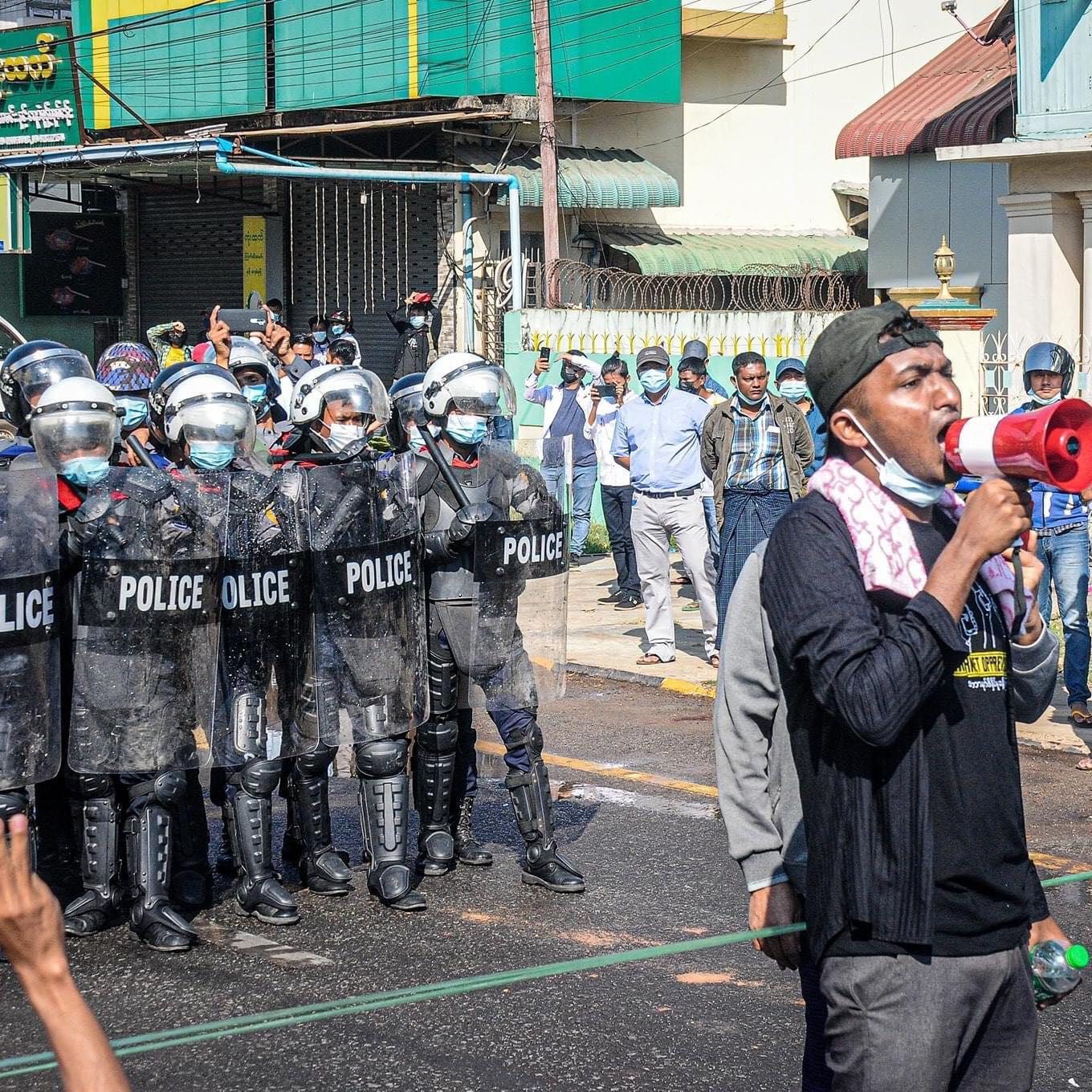
Murder simply means the unlawful premeditated killing of one human being by another. As the element of the crime against humanity, the perpetrator killed one or more people. BHRN recorded the murder of 1685 civilians by the junta from February 2021 to December 2021. Peaceful protesters and political activists were killed by shooting, beating, and tortured until they died. On 8 February in Nay Pyi Daw, Mya Twae Twae Khaing was shot and killed by police at the protest. She was the first murder by the Junta following the coup. Video footage of the incident clearly shows that Mya Twae Khaing was hiding behind a bus stop while the police shot live rounds.
On 27 March, at least 31 people from Mandalay were killed while they were peacefully protesting. While a group of Medical, economic, engineering, and computer professionals protested with the motorbike for the anti-dictatorship movement, the junta shot everyone on the street. That heartbreaking scene clearly demonstrated that the junta was intentionally killing unarmed civilians for practicing their fundamental right to protest.
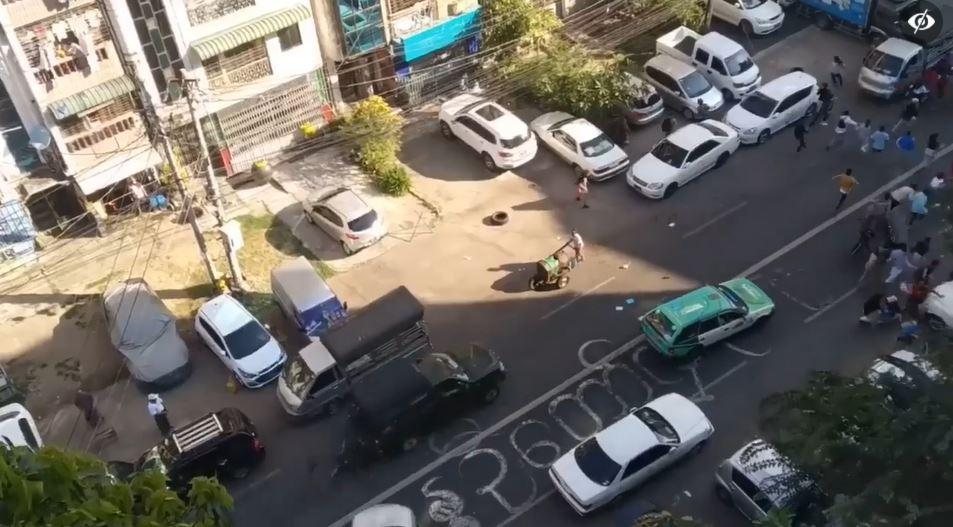
On 5 Dec, a military car was rammed into a flash mob protest crowd. Due to incident several people were injured and one was in critical condition. The video footage demonstrates the violence used against peaceful protesters.
Extermination & Torture to death
On 9 April, in Bago Township, authorities launched a heinous attack on civilians, killing anyone who moved. According to BHRN data and published media, at least 82 people were killed during the 9 hours of the crackdown in Bago. One eyewitness said some of the bodies were taken by the military and that it is impossible to confirm the exact death toll.9
The situation is getting worse and the military junta's brutality does not stop. On 2nd July in Depayin, at least 40 people were shot by the military junta while there was a clash with the PDF. Eyewitness confirms that some people were unarmed civilians and farmers who were shot in the head by the junta.
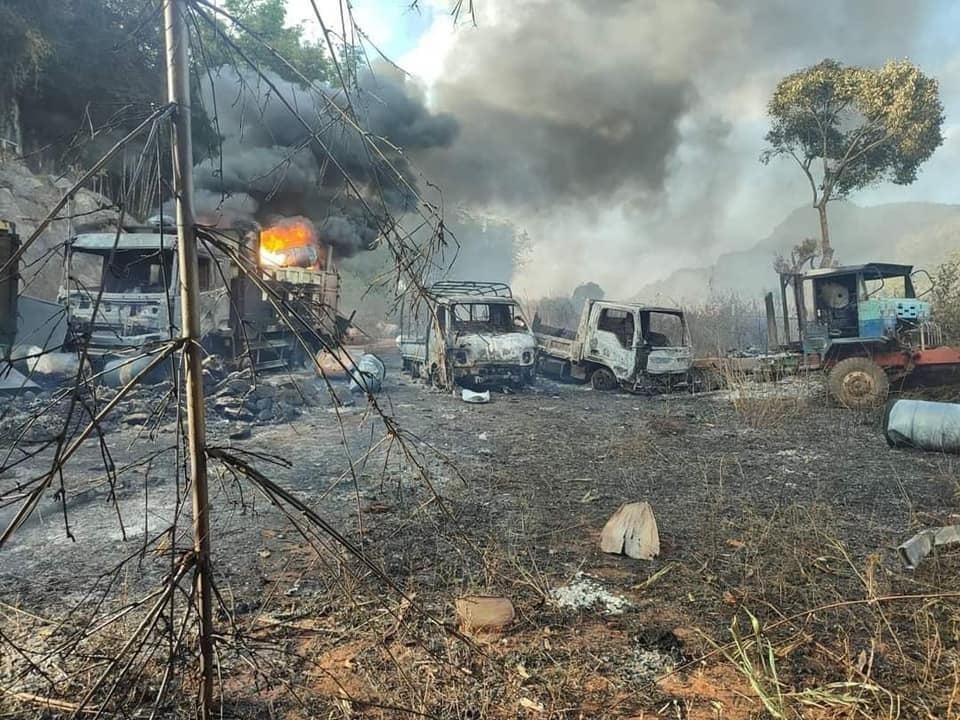
On 9 July and in July at least 40 people were killed by the military junta in villages of Kani township. On Christmas Eve 24 December, the bodies of nearly 40 people were burned to death near Mo So village in Phruso township, Karenni or Kayah State. As Mizzima media stated, "at least 35 Karenni residents were taken in cars and burnt to death by the Myanmar Army LIB 108 Battalion under Brigade (66) on a road 2 kilometers northwest of Moso village, Phruso township at around 10 am on December 24.”10
Deportation or forcible transfer of population
On 16 June, the military junta burned Kinn Ma village in Magway Division, and two elderly people were burned alive in the fire. Locals had left the village due to fire and threats to their safety.
On September 12, the military junta burned Kyauk Yit Village, located in Myuang township. Due to the fire to the village, local villagers had to relocate to other areas and still are unable to return.
On 16, 29 October, and 25 November, the military set Htantalang township on fire, and more than 500 houses were destroyed together with two churches. The local people had no choice but to leave the town.
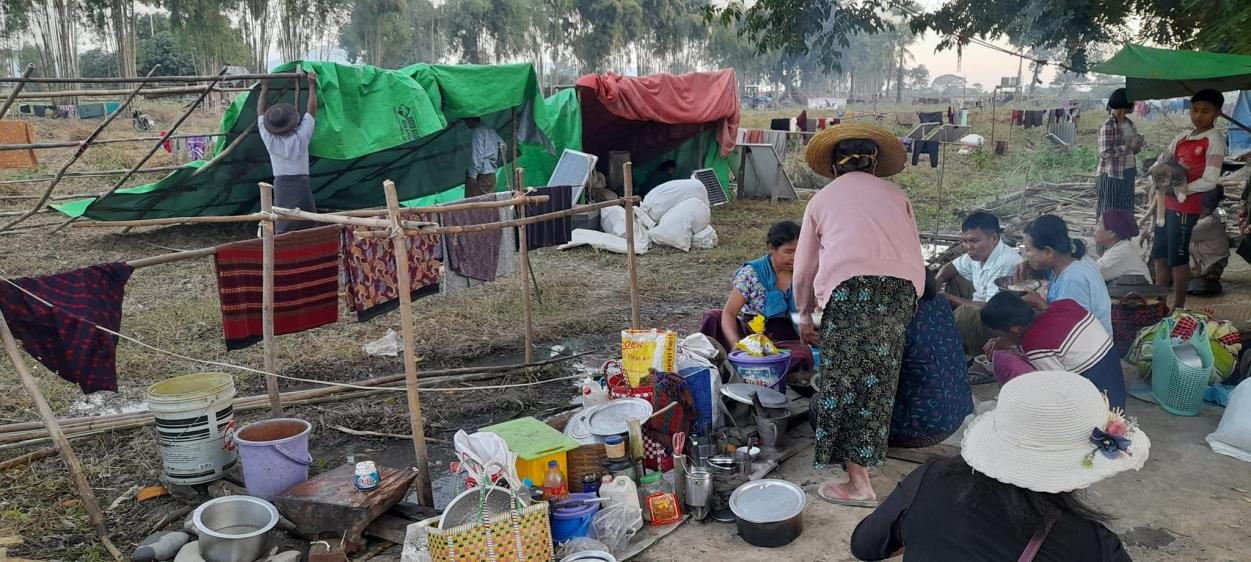
On December 28, Chaung Kwa village and nearby villages in Kalay Township, Sagaing Division were burned by the military junta, and 2000 people had to flee the villages.
Many more places burned from June until recently, and local people were forcibly transferred from their villages and homes due to fear of violence and threats by the military junta.
Rape, sexual slavery, enforced prostitution, forced pregnancy, enforced sterilization, or any other form of sexual violence of comparable gravity
On 11 June, one of the nuns from Nant Phat Kar village, Shan State, was raped by the military junta and forced to remain quiet after being given ‘hush’ money.
From June to September, four women from Kani township were raped by the military junta. One of the victims was only 14-years-old. The other victims were 26-years-old, 30-years-old, and a 45-year-old widow.
As with rape, sexual harassment and sexual assault against women in detention have been documented. One Democratic activist, Eain May Soe, confirmed that soldiers were sexually harassing her in one of Myanmar's notorious interrogation centers. She was then sexually assaulted while blindfolded. "They pulled down the oversized top I was wearing. They touched me as they did it, exposing my body," she said.11
7Conclusion
BHRN data collection and other reliable international reports stated that the acts of crime committed by the Military junta are a systematic and widespread attack against civilians and can be analyzed as the Myanmar Military acting as a terrorist group. The regime's crimes are apparent when examining the numbers of deaths, arbitrary arrests, horrific violence, and arson attacks against villages that cause the forcible transfer of the population.
As the contextual elements of crime against humanity have been listed, the Myanmar military’s actions can be seen as crimes against humanity. These include the arbitrary arrests of people for their political beliefs, the nighttime raids of family members of political activists, the murder of civilians, and the torture of political prisoners. The killings in Kani and Moso villages are clear evidence of the junta’s torture and murder of civilians. But there is no regret or restraint by the Myanmar military. The acts of the Myanmar military are intended to kill civilians and are part of a systematic plan to attack the people. These actions are systemic, utilizing the state’s power to unleash violence and terror on a protected class. Since the military launched the coup last year, they have killed at least 1,685 people.
The destruction of entire villages and forcible transfer of people is a serious crime that the international community must address immediately. The safety and well-being of civilians are at risk, and a new refugee crisis is unfolding in the region. The extermination and burning of villages and towns were started in April and still happening as the large number geographic of the country.
The military continues to use sexual violence as a weapon in war. Human rights organizations, including BHRN, have extensively documented sexual violence used as a weapon by the Myanmar military against Kachin, Karen, Shan, and Rohingya women. This horrific practice has continued after the coup. Women near conflict and detained women have already reported that the military has used sexual violence following the coup.
In addition, the one-year duration of the coup demonstrates that the Myanmar military junta is against the contextual elements of Crimes Against Humanity stated in Article 7 of the Rome Statute. BHRN believes that the inhumane acts committed, which are described in this report, can reasonably demonstrate that the Myanmar junta is committing Crimes against humanity. As consistently reported, BHRN would like to call the international community, States with significant influence, the United Nations Security Council, and the United Nations Human Rights Commission to take effective action against Myanmar Military Junta.
8Key Recommendations
Key Recommendations to United Nations, ASEAN, and States
- Refer the situation in Myanmar to the ICC or create an ad hoc international criminal tribunal under Chapter VII of the UN Charter that includes, within its temporal jurisdiction, past crimes committed against ethnic and religious minority groups, including the Rohingya
- Do not recognize the military junta as the legitimate government of Myanmar
- Exercise universal and other forms of jurisdiction to investigate any individual from Myanmar – irrespective of position or rank – who may be responsible for committing genocide, war crimes, and crimes against humanity under international law
- Continue to call on all UN member states to prevent the flow of arms to the military junta.
- Prioritize humanitarian aid assistance reaching refugees and internally displaced people through border states, international organizations, and local civil society organizations. These powers must use political influence to reach and assist people in need
- Do not engage with the military junta economically and impose sanctions on their interest, including on oil and gas and its related ventures
- ASEAN member states and other states to respect and express the solidarity with the People of Myanmar
- ASEAN member states and other states to condemn the human rights crime committed by the Myanmar junta
- ASEAN member states and other states collaborate to take action on the human rights violations and crimes committed by the Myanmar military
9Appendix – Infographic


Tap any image to see it full size.
10References
- Burma Human Rights Network. (2021). Before Our Eyes-BHRNs Report.pdf. Google Docs. https://drive.google.com/file/d/1HQEH_0HtW7-TA85KT3h_29bytSbhOUZc/view
- Vernon, Richard. "Crime against humanity". Encyclopedia Britannica, 2 Jun. 2017, https://www.britannica.com/topic/crime-against-humanity
- United Nations. (n.d.). United Nations Office on Genocide Prevention and the Responsibility to Protect. https://www.un.org/en/genocideprevention/crimes-against-humanity.shtml#footnote-2
- International Criminal Court. (2011). Elements of Crimes. International Criminal Court.
- Carswell, A. J., Abbott, K., & Comité international de la Croix-Rouge. (2012). Handbook on international rules governing military operations. ICRC.
Footnotes
- United Nations (2022). Universal Declaration of Human Rights. Accessed 25 January 2022. https://www.un.org/en/about-us/universal-declaration-of-human-rights ↩
- https://www.thutacollect.xyz/news/2239 ↩
- https://www.bbc.com/news/world-asia-56122369 ↩
- https://aappb.org/?p=13251 ↩
- https://www.bangkokpost.com/world/2227043/5-dead-after-myanmar-security-forces-ram-car-into-yangon-protest-media ↩
- https://news.un.org/en/story/2021/08/1097252 ↩
- https://data2.unhcr.org/en/documents/details/90542 ↩
- https://www.un.org/en/genocideprevention/crimes-against-humanity.shtml#footnote-2 ↩
- https://www3.nhk.or.jp/nhkworld/en/news/backstories/1780/ ↩
- https://www.mizzima.com/article/karenni-police-confirm-details-christmas-eve-massacre ↩
- https://www.bbc.com/news/world-asia-59462503 ↩
Acknowledgement
This report refers to the written style of the Before Our Very Eyes which was prepared by Erin Farrell Rosenberg and issued by BHRN in July 2021. BHRN would like to acknowledge and express gratitude to Richard Potter for proof reading and local team members for excellent data collection during challenging situation.
About BHRN
Burma Human Rights Network (BHRN) was founded in 2012 and registered in 2015. Burma Human Rights Network (BHRN) is working for human rights, minority rights, religious freedom, and social media monitoring hate speech in Burma. Our local researchers collect the data across Burma and extend to Burma borders. Information collected is checked and analyzed to use in advocating with local, international state holders with concerning issues. BHRN also published a reliable report based on evidence and analysis. BHRN is one of the leading organizations from Myanmar which conducts evidence-based documentation and international advocacy.
All human beings are born free and equal in dignity and rights.1
www.bhrn.org.uk · facebook.com/bhrnuk · @bhrnuk
© 2021 BURMA HUMAN RIGHTS NETWORK. Company number 09633796. Private Limited Company by guarantee without share capital use of ‘Limited’ exemption, incorporated on 11th June 2015.