1Executive Summary
- From October 2020 to April of 2021 BHRN interviewed 29 refugees ages 14 to 60 from 10 different camps in Cox’s Bazar
- Of those interviewed 68% were women
- 93% of refugees said they did not receive enough food rations
- 72% described their current safety situation negatively
- 100% said violence is a problem in the camps
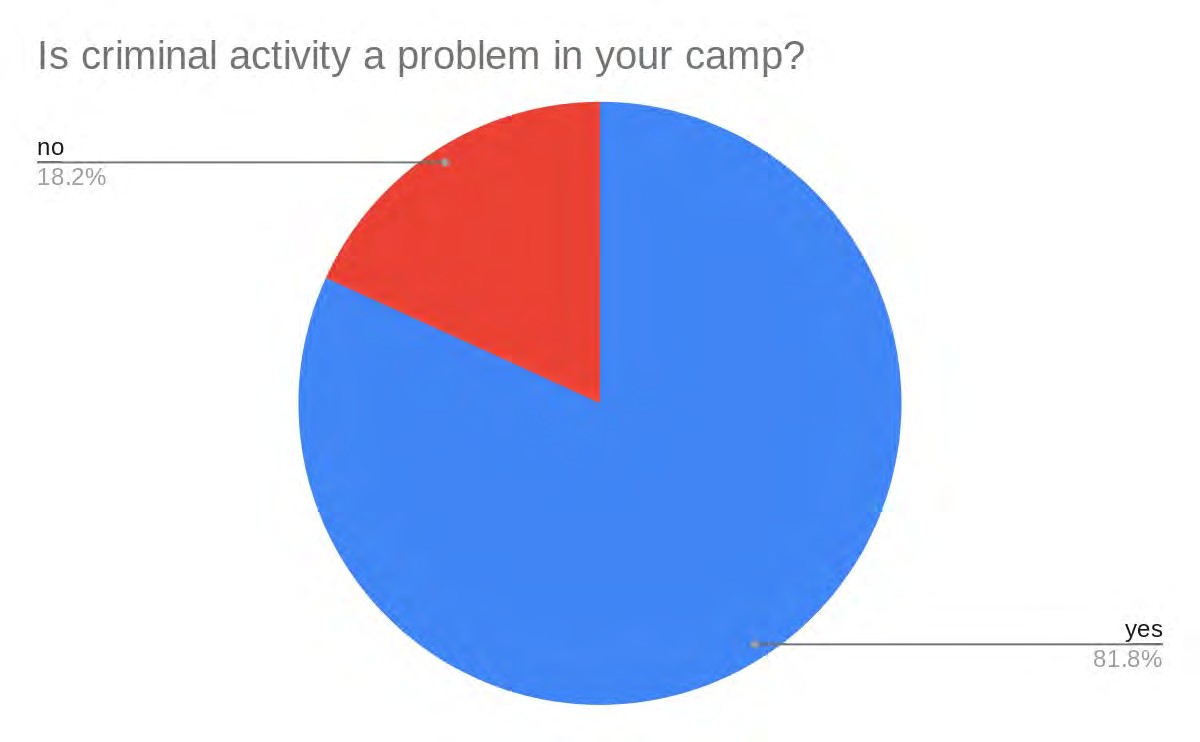
- 81% said that criminal activity is a problem in the camps
- Arson, kidnapping, trafficking, drugs, and fights were listed as the most common crimes
- Women’s safety was a frequent topic of concern. This covered kidnapping, trafficking for arranged marriages, gender-based violence, and street harassment
- Women said that supplies particular to women, such as menstruation products, were lacking in aid distribution
- 90% of refugees interviewed said that kidnappings were a problem in their camp
- Trafficking of refugees from the camps to Malaysia and India were found to be an ongoing problem
- Arson attacks in the camps were a major cause of concern for refugees that caused death, injury, and loss of property for many and great unrest and anxiety for the rest.
- 90% of refugees described their current overall situation negatively
- Among the greatest concerns refugees had, lack of work and income was the most common
- When asked what change they wanted to see in the next year the majority of refugees said they hoped to return to Burma
- When asked what change they wanted to see in the next five years the majority of refugees said they wanted to return to Burma
- When asked what needed to change in order for them to go back to Burma, the majority of Rohingya refugees interviewed by BHRN said equal rights (ethnic and citizenship) and safety had to be ensured for them to be able to return. International pressure was raised as a requirement several times, implying that nothing could change if the world didn’t raise serious pressure on Burma to equitably return refugees to the country.
- 100% of refugees said they wanted to return to Burma despite the atrocities the Burmese military committed against them
- 63% of refugees said they would want to be repatriated to a third country if it were an option
- Despite all of this 72% of refugees said they were still hopeful
2Methodology
The information in this report was gathered between October 2020 and June of 2021. BHRN interviewed 29 refugees living in 10 different refugee camps in Cox’s Bazaar, Bangladesh. Interviews were conducted face to face in Rohingya language by one researcher at a time who was a native speaker with the informed consent of participants. BHRN interviewed individuals who were between the ages of fourteen and sixty years old. BHRN intentionally interviewed more women, 68% of participants, than men in order to ensure that their concerns could be given a platform they are often denied. A portion of participants was sought out specifically because of their relationship with trafficking victims. The rest were chosen randomly. All refugees interviewed for this report are mentioned only by gender and age to help protect their identities. The queries posed to refugees were general questions about aid, safety, crime, violence, trafficking, and their outlook on the future. By gathering data on the perspective of refugees, BHRN is seeking to gather an understanding of which issues they themselves find most important. The research also shines an important light on the strained relationships between the refugee community, the host community, the authorities, and the organizations inside the camps. By highlighting these concerns and divides, it is BHRN’s hope that they may better be addressed. The researchers and photographers who worked on this report inside of Bangladesh have chosen to remain anonymous for their own safety. The value of their work can not be overstated and it is our hope that one day soon they can be safely celebrated openly for their amazing contributions.
3Introduction
This report interviewed a sample of Rohingya refugees living in the refugee camps in Bangladesh. All of them fled Burma in 2017 when the Burmese military waged a genocidal campaign against the minority driving one of the largest mass exoduses in recent history.1 Since then, they have lived in squalid and crowded conditions regularly exposed to the elements during monsoon season. Crime has increased in the camps and militant groups have established a firm presence in many of them.2 Kidnappings are frequently reported and traffickers exploit the desperation of refugees seeking to flee for work, marriage, or safety.3 Violence between groups periodically escalates into ‘gang wars’ that involve shootings, kidnappings, and murder. Refugees are unable to work to improve their situation in life and for some, the only alternative is to become involved in criminal activities.4
The international community has made superficial efforts to repatriate the Rohingya, negotiating with Bangladesh and the former government of Burma with terms unfavorable to the Rohingya, such as a lack of viable plans to ensure the rights, citizenship, ethnic recognition, and safety of the Rohingya. Initial plans to repatriate the Rohingya sought to force them to participate in the National Verification Card scheme which would further disenfranchise and delegitimize them. Plans since then have made little progress and the international community has become less interested in the subject as time passes.
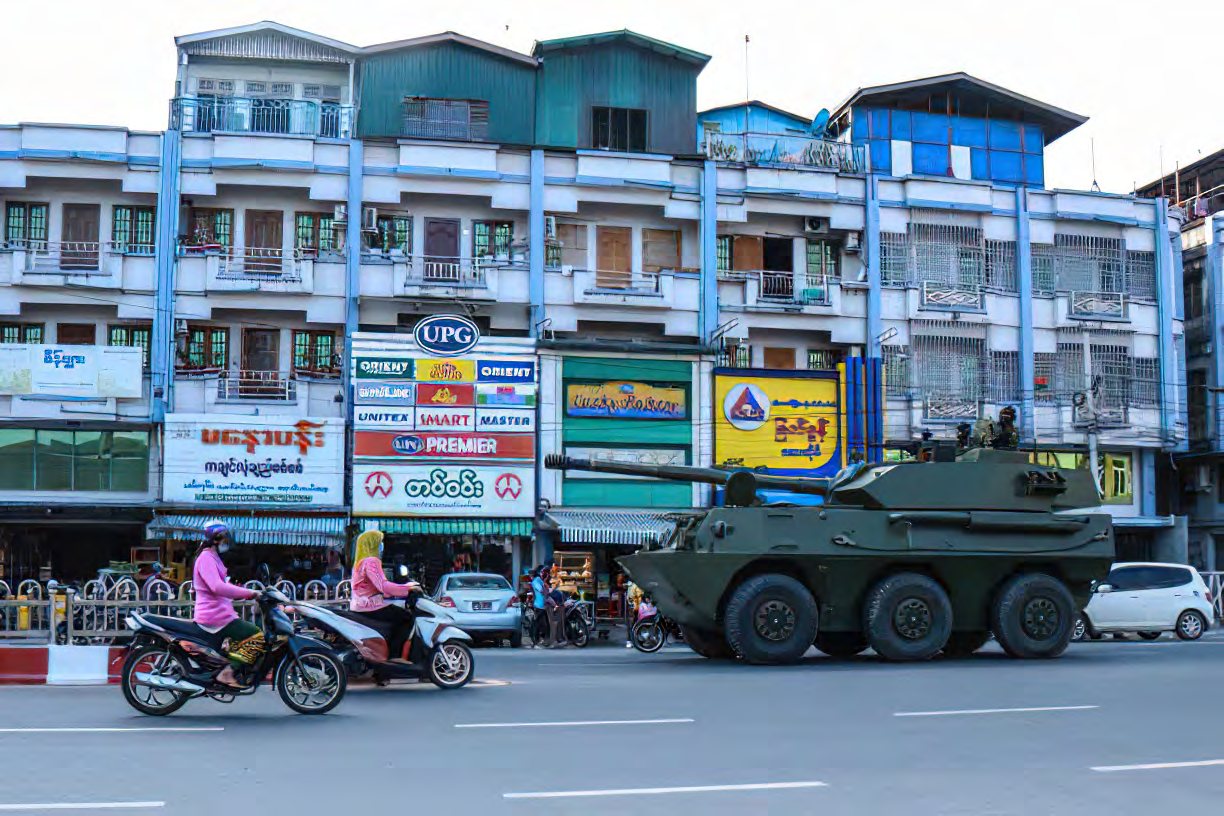
In February of 2021, the Burmese military waged a coup against the democratic government in the country, arresting their opposition and taking control of key agencies and positions in the government. The coup was followed by mass protests by civilians that are still ongoing today. At the same time, fighting between the military and ethnic armed groups has drastically increased as civilian groups from mainland Burma have also begun armed training to fight the military. These developments further undermined the establishment of the conditions necessary for a potential return of the Rohingya.
This research was conducted with the main goal of finding out the needs, hopes, and fears of the refugees directly from them, in the view of addressing those concerns with their autonomy in mind. BHRN’s findings suggest that the population is exhausted by promises that do not translate into tangible changes, feels surrounded by danger, and is somberly processing what it may mean to continue living in the current situation.
4History of the Refugee Crisis
19781991–199220122016–2017
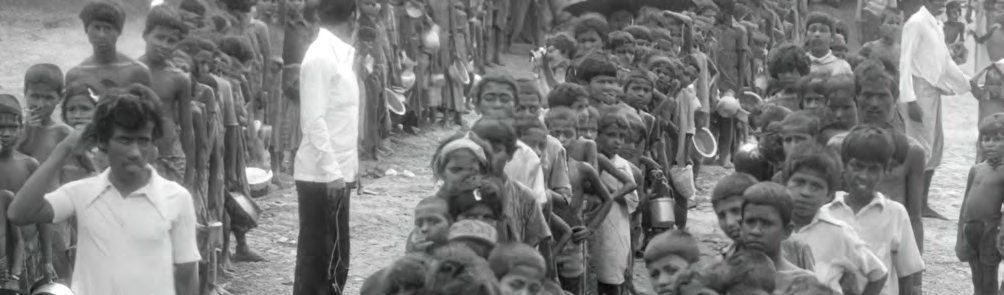
There are currently over a million Rohingya refugees living in the refugee camps in Bangladesh near the Burmese border. While the majority of them arrived there following the Burmese military’s genocidal campaign of 2017, tens of thousands had been living in the camps long before that. Many of the young adults inside of the refugee camps were born there and don’t know any other life. While the government of Bangladesh has rightfully been praised for hosting such a large population, several serious issues persist regarding the human rights and quality of life for the refugee population.
The first mass exodus of Rohingya from Burma into Bangladesh occurred after its independence, in 1978. The Burmese military launched “Operation Nagamin”, also called “Operation Dragon King”, which sought to “expel” supposed foreigners through military force from Rakhine State. With the independence of Bangladesh and growing waves of anti-South Asian sentiment in Burma, the Rohingya became a prime scapegoat for the military and over 200,000 fled to Bangladesh. Similar operations took place in 1991 and 1992, where over 250,000 more Rohingya were forced out of the country and into Bangladesh due to severe persecution by the military, including forced labor, murder, torture, and rape.56
As more Rohingya were forced into Bangladesh in the 1990s, the rights of refugees deteriorated and tensions with the host community worsened. Significant restrictions on the right to education and freedom of movement, as well as forcible returns, were imposed on the Rohingya who remain to this day. Rohingya have struggled to access livelihood, find employment, access even basic education, and have been offered little hope of ever leaving the refugee camps, let alone Bangladesh. The hopelessness of the refugees’ situation and the poverty of the host community has oftentimes led to violent and exploitative situations that have only worsened over time. Notable among these is the emergence of criminal gangs, human traffickers, and armed groups, all of which persist today. While most organized gang activity impacts men and boys, trafficking and gender-based violence have been a serious concern for women and girls.
Another wave of refugees arrived in Bangladesh in 2012 after anti-Rohingya riots rocked the state for months. Conservative estimates put the death toll at over 150 deaths, with over 140,000 Rohingya internally displaced.7The riots were largely instigated by ultra-nationalists and extremists connected to the Burmese military. These riots have often been recorded as sectarian fighting between the Muslim and Buddhist communities, but a great deal of evidence since these events has implicated that police and military personnel took part in the violence against the Rohingya. The following years saw periodic spates of violence against the Rohingya, often by the military and police,8 but it wasn’t until 2016 that the population came under threat of mass expulsion again. A new Rohingya militancy grew from the events of the past 30 years that sought to strike back against the Burmese military and force the world to take notice of their plight. The group called itself Harakat al Yaqeen, or the Faith Movement. They soon changed their name to the more secular-sounding Arakan Rohingya Salvation Army. The group first attacked on 9 October 2016, raiding three police posts. The military responded with a devastating crackdown against the Rohingya that saw widespread human rights violations against the minority. The crackdown persisted into the summer of 2017 when ARSA’s next major strike would occur.
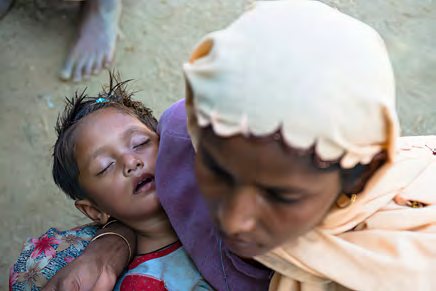
On August 25th, 2017 ARSA launched a surprise attack on 24 police posts and a military base in northern Rakhine State. The militants were poorly armed, had little training, and despite the element of surprise the military and police were able to repel them with little effort. The following morning the military used the attacks as a pretext to begin a genocidal campaign against the Rohingya population throughout all of northern Rakhine State. Widespread reports of mass killings, torture, gang rapes, arson, and looting by the military were recorded.9 After hundreds of deaths and widespread displacement, ARSA announced a unilateral ceasefire on October 9th and the military officially ended their campaign a few months later. As a result of the military’s assault, the Rohingya refugee population in Bangladesh rose to over one million people.
The massive influx of refugees into Bangladesh created an enormous challenge for the country and the international community to provide much needed humanitarian assistance to Rohingya refugees, including food, health care, security, and housing for all of them. While all parties should be commended for their efforts to address these needs, it is vital to also address the ongoing problems and shortcomings within the camps to ensure the rights, safety, dignity and quality of life of those that remain.
5Food Aid
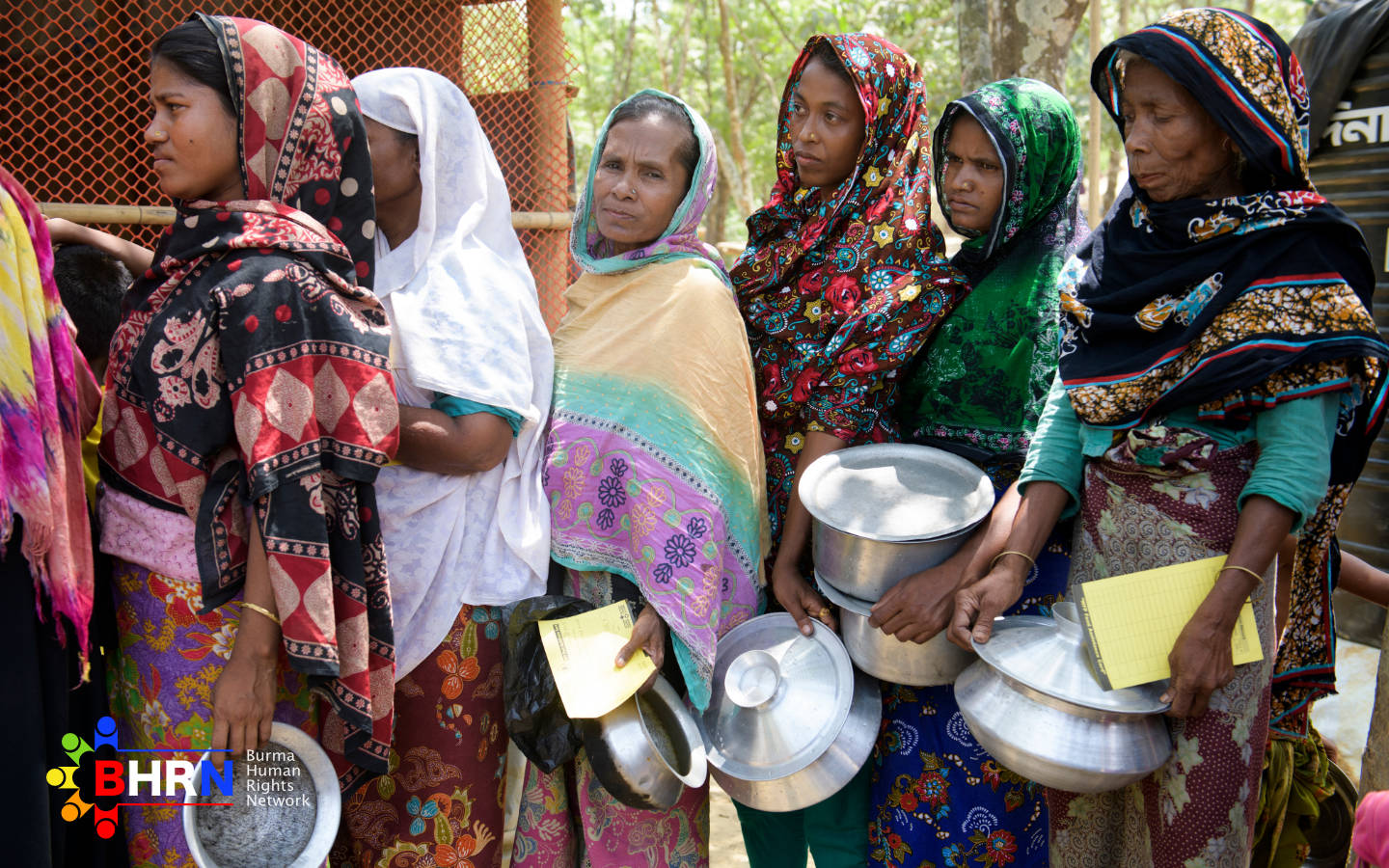
Feeding over a million refugees is a tremendous ordeal. The logistics are difficult and the cost is vast. The agencies that feed the refugee population provide a life-sustaining service that should be applauded, yet when speaking with refugees food aid was one of the most frequent areas of concern for them. Nearly 93% of refugees BHRN spoke to said that the rations they received were not sufficient to feed their family for an entire month. Some said the food they received was spoiled. Many also complained of having had to live on only rice, dried fish, and lentils for years.
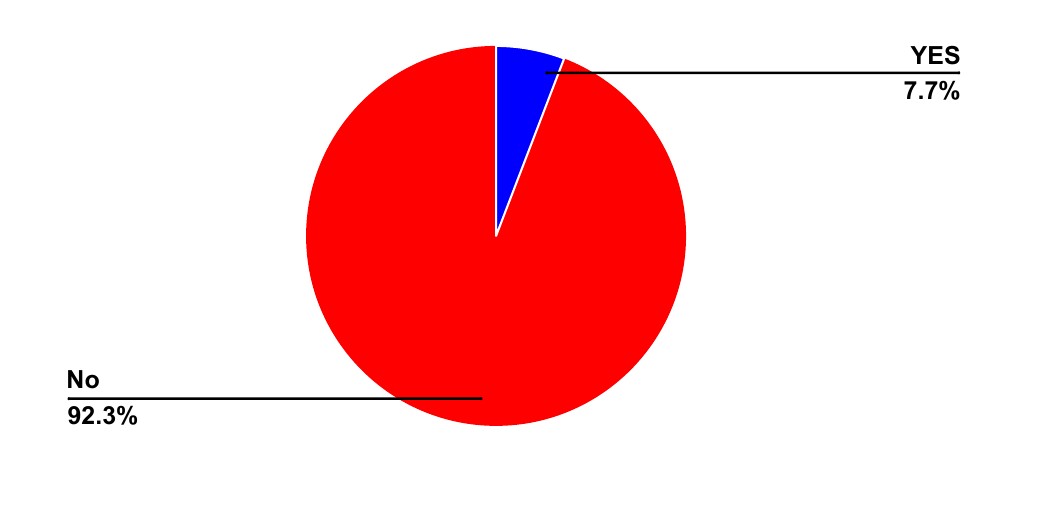
This problem is compounded by the lack of job opportunities for refugees. While 92 percent of refugees said they did not receive enough food, many also said they wanted the opportunity to work to earn money to buy more food. This was worsened dramatically by the Covid-19 pandemic which forced merchants in the camps to shut down their shops, shrinking the tiny economy inside the camps even more.
A 30-year-old woman interviewed by BHRN said, “No, the food is not enough. We have to buy all the items. We have to borrow rice from one another. But because food is scarces we can’t loan to each other, so we have to buy the rice by taking debts. We also have to buy dried fish, consumables, and all other things.”

Many of the obstacles in feeding a large refugee population could be lessened by allowing that population to seek ways to be self-sufficient. Many Rohingya interviewed for this report spoke positively about their ability to work and support themselves in Burma compared to how they are living in Bangladesh, even though they faced harsh restrictions on employment and labor in Burma. The willingness to work and the many skill sets the Rohingya bring with them should be encouraged by Bangladesh rather than legally prohibited. This would help ease the burden on aid agencies, allow for greater autonomy for refugees, and could help the economy of the host communities grow as well.
A 42-year-old man told BHRN, “I have been working with an NGO, through which I could make little money in order to support my family. But we have been laid off since our project has ended. So, it's been about 7 months that I am jobless now. I have been through a difficult situation in supporting my family for 7 months. The WFP (World Food Programme) is providing us rations which we can somehow use for meals, but we don’t have any resources financially. This is Bangladesh, not our country. In Myanmar, we had income sources, and we were also able to get loans and support from our relatives and neighbors. We could also go fishing and do daily work which helped us support our families. In Bangladesh, we don’t have any such way of getting support.”
6Medical Needs
Medical care in the refugee camps is another extremely difficult task for the agencies responsible for providing care. Half of the refugees BHRN spoke to said they had access to medical supplies but listed several problems in the process. Most refugees receive medical supplies when they seek treatment but many have said the care and types of medicine they are given are inadequate, such as paracetamol being given for serious ailments. On top of this, when refugees have more serious health concerns they may have to seek treatment outside of the camps, which is often a long, expensive, and sometimes humiliating ordea where refugees are looked down on or scolded by Bangladeshi staff. Several refugees complained that staff in Bangladeshi hospitals treated them poorly or rushed them through treatment.

Despite the enormous difficulties of providing medical aid to over a million people, the goal of improving the quality of available healthcare is worth pursuing. This may require more clinics in the camps and more staff that can properly diagnose and treat illnesses and injuries. Bangladesh and NGOs operating in the field should also consider working closely with community hospitals towards an approach that would better cover the cost of treatment and foster a sense of understanding and compassion with the refugee population.While local NGOs have picked up a great deal of cost for medical needs, the UN and supportive countries could work towards a system to better cover the costs of care for refugees who need to seek treatment outside of the camps for surgery or other serious events. It would also be significantly beneficial for NGOs and Bangladesh to coordinate training and hiring programs for Rohingya to become medical workers within the camps. Programs that could train Rohingya to become medical aides, midwives, or even nurses, could help reduce some of the dependency on NGOs and provide employment for a number of residents inside the camps.
“I got a pain in my stomach following my arrival here from Myanmar. Because of that pain I was not able to eat anything, so I went to a Turkish hospital (NGO) for a consultation. But it wasn't diagnosed by them(doctors), though I went to them about three times. When I went to them the last time, they found that it was a stone inside my stomach as they checked me carefully. I was told that the operation for that stone couldn’t be done there and I was also told to go outside of the camps for surgery. After hearing that, I became so disappointed as many hospitals of different NGOs are here with a lot of funds, but we can’t manage to get access for our surgery and we have to go outside of the camps for any surgery. The stone had to be taken out by incising my stomach in surgery after going to Cox’s Bazar, and I had to spend my money. So, I didn’t get support here.” A 28-year-old man told BHRN.

Most refugees BHRN spoke to had been sick or injured in the past year. Most of the ailments they described were significant and required some form of medical attention. Given the high frequency of refugees requiring medical care, it is not surprising that many also expressed frustration with very long lines and waiting times at medical facilities inside the camps, even for routine care like getting medication for diabetes. Those seeking treatment frequently said all they were given after waiting to be seen was paracetamol. Given the limited number of clinics, physicians, and medicine in the camps compared to the total number of refugees, it would benefit both medical staff and the refugee population for more resources to be allotted for these purposes by the relevant UN agencies and the international community.
A side effect of this deficit has been the appearance of unofficial clinics in the camps which are unregulated, lack oversight and quality assurances, and are run by unqualified personnel. As people seek solutions to their medical problems outside of NGOs-ran health care facilities, the demand for these clinics is likely to increase, exposing the population to potentially unsafe practices and treatments.
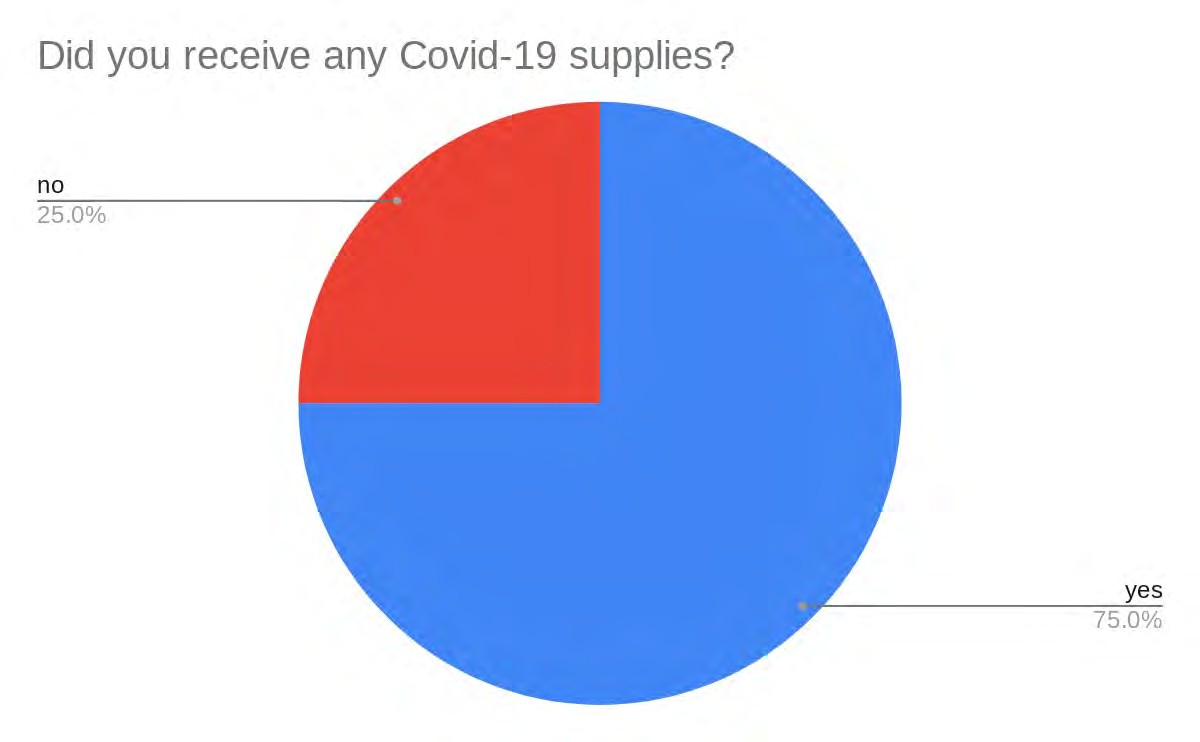
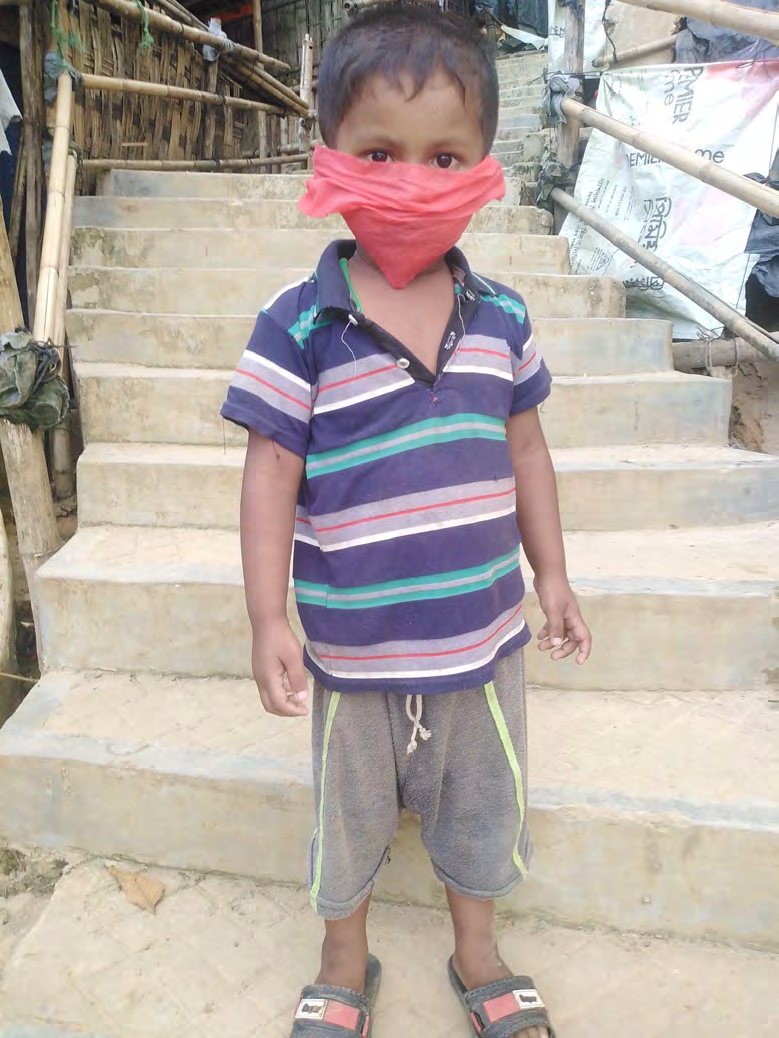
The outbreak of Covid-19 had a great impact on the refugee camps, though thankfully the number of infections has remained relatively low since it first appeared in the camps. BHRN asked refugees if they had received any supplies to help them prevent Covid and 75% said they had. Those who received supplies were typically given soap, hand sanitizer, and sometimes face masks. The 25% who did not receive any supplies should be cause for concern, where if the trend held at scale it would mean hundreds of thousands never received any supplies to protect them from the virus.
7Safety and Security in the Camps
Refugee camps are too often riddled with dangers for the people who live there. In the Rohingya camps, this seems especially true. Refugees relayed concerns to BHRN over violence, theft, trafficking, arson, criminal activity, and gang activity. Violence in the camps comes in many forms, from gender-based violence to abductions by criminal gangs or militant groups. Refugees had mixed perceptions on whether or not security forces in the camps helped their situation or made it worse.
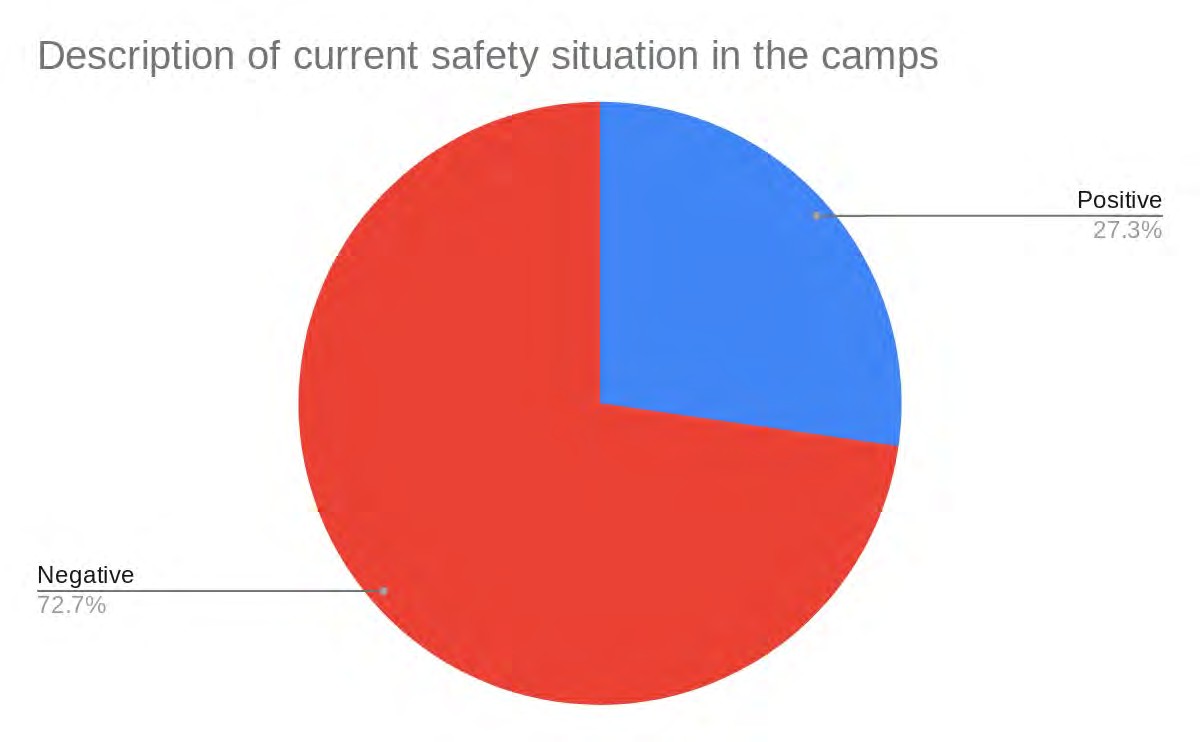
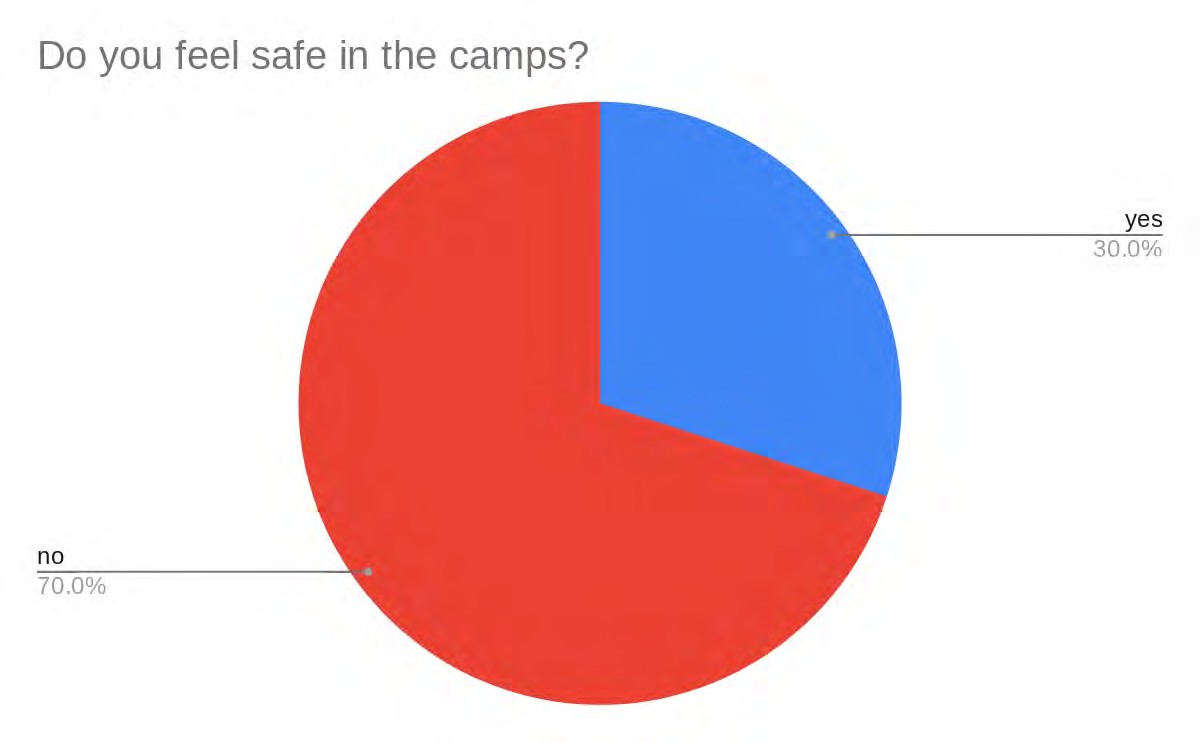
The refugees BHRN spoke with gave an overwhelmingly negative outlook on the safety situation in the camps. About as many said they felt unsafe in the camps. Many reasons were given for this, including violence, gang activity, extortion, and arson. Some also expressed concern about the security forces themselves. Others related this to the threat that they may be moved to Bhansan Char Island, a new isolated campsite many refugees have been moved to despite concern of the island's vulnerability to the elements. Tragically, the variety of threats refugees see around them comes from every direction.

A 30-year-old woman conveyed some of these layered concerns to BHRN, ”We haven’t been safe at all, as we( our children) can’t access education, and there is no security here. We don’t have clothes to use during menstruations, and we don’t have burqas to go to the hospital. We don’t have anything at all. We are facing difficulties. We can’t stay safe and well in the camp”
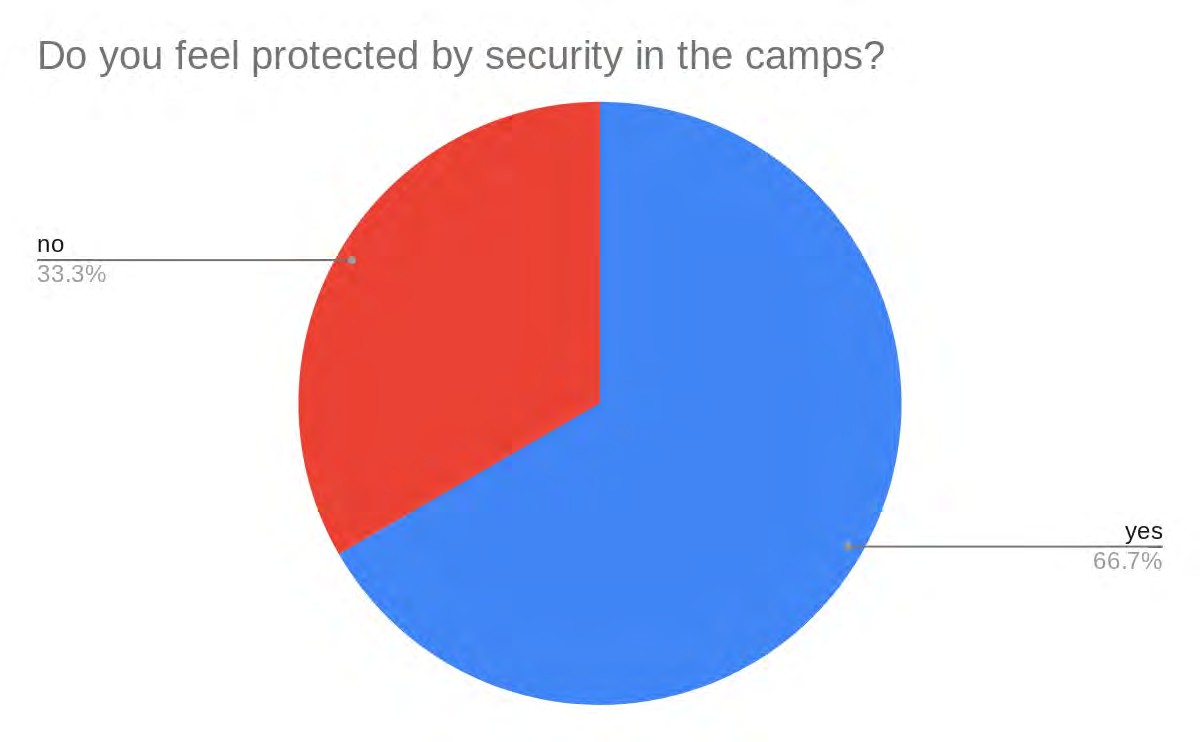
The majority of refugees interviewed by BHRN said they felt protected by security forces but often this came with some major criticism. Some felt that while the police offered them some protection from criminals or violence when they were present, they could also be too harsh on innocent people. Others said that the police extorted people or harassed them for petty infringements, like possessing a cell phone, which was prohibited at the time interviews took place. Notably, those interviewed seemed to have a high opinion of the Bangladesh army and saw them as less corrupt and more compassionate.

“Yes, it feels safe, but they(security forces or camp authorities) make people suffer by snatching phones, money, and robbing. But the camp is safer because of their presence here.” A 28-year-old man told BHRN.
A 25-year-old woman said, “If someone informs them(the police) of something, then they demand money. Or else, they beat the person down if they don’t get money and imprison the person then and there. That’s why we feel afraid as we don’t have money in the camp. As they are here as security forces, where can we get things to give them if they ask us?”
8Violence in the Camps

Everyone BHRN spoke to said that they felt violence was a problem in the camps. They described domestic violence against women, unsafe conditions for women using latrines at night, criminal gangs fighting, arson attacks, and fighting and disappearances among refugees. Many said they were in fear of the violence, while some expressed concern for others caught in the middle of it. The unanimous acknowledgment of violence indicates it is an area of concern, although broad, that requires significantly more attention by authorities and NGOs on the ground.
Disappearances in the camps were listed as a common problem by many, though few gave many specifics about this. There was frequently a reluctance to speak about certain topics for fear of retribution.
A 30-year-old woman told BHRN “Yes, violence is another problem we have as one kills another, and one is after another to cause them harm. I am shameful as the name of my people is being defamed. I also feel unsafe with such violence. In our camp-1W, three or four people were killed, and we don’t know where their wives and children have gone. We can't even escape from violence in our shelters because of violence. Yes, there is domestic violence that occurs between husbands and wives. These happen because of money. If the wife asks her husband to buy some goods, he beats her as he doesn’t have any work. The husband argues by saying where can he get money when his wife asks him to buy snacks for their children. Violence happens in this way. The men can’t work even though they want to. Some of them were able to work in the host community before. Violence and beating always appear between them and they get angry.”
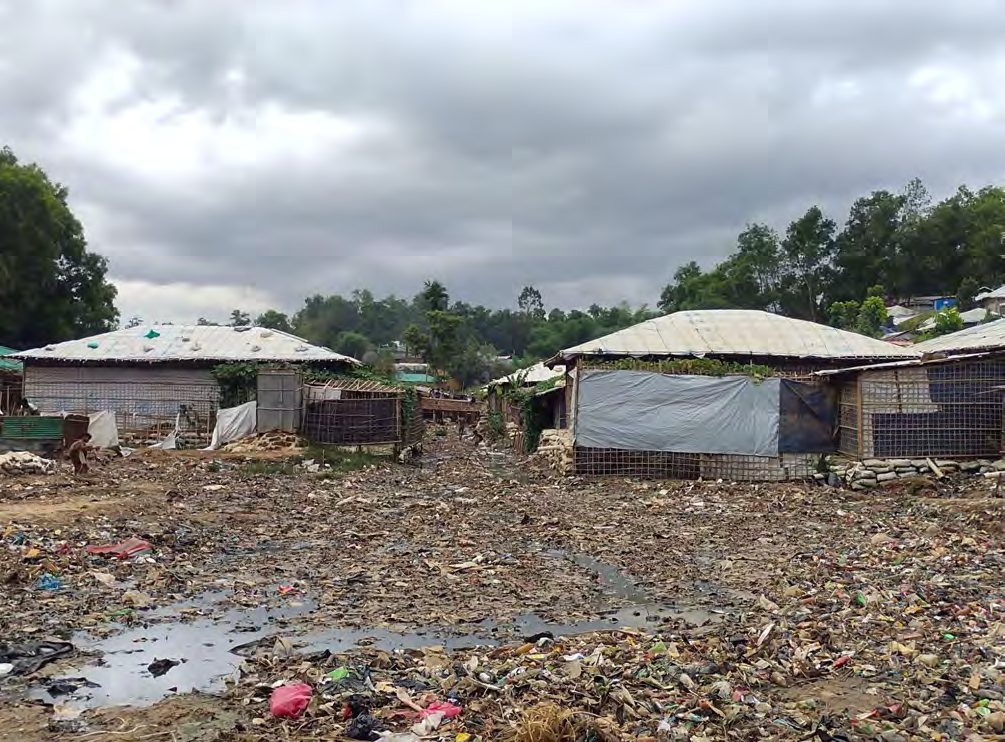
Disappearances in the camps were listed as a common problem by many, though few gave many specifics about this. There was frequently a reluctance to speak about certain topics for fear of retribution. Reports of missing children10 and disappearances of individuals involved in feuding gangs and militant groups11 have been frequent in recent years.
The issue of gender-based violence came up frequently in conversations BHRN had with refugees and the topic is covered in greater detail further in this report. Like many of the issues covered by this report, many refugees believed that the lack of freedoms in the camp contributed to the increase in violence they witnessed. With no freedom of movement, work opportunities, or hope on the horizon many resorted to crime, and those that didn’t were left with a sense of helplessness, anger, and depression. There have also been reports of people forced into criminal activity after threats of kidnapping, mistreatment, or murder by criminal gangs.
Criminal activity inside the camps was considered a problem by most of the refugees interviewed by BHRN. BHRN used the vague term “criminal activity” and allowed those interviewed to explain what kinds of activity they felt were the greatest issues for them. Robbery, violence against women, kidnapping, drug trafficking, arson, and general violence were all listed as major concerns. In some areas, refugees said they felt protected by local leaders and ‘sentinels’ appointed by their local leaders. Elsewhere people felt completely alone and vulnerable with little or no help from police or camp authorities.
A 28-year-old man told BHRN in regard to criminal activity in the camps, “Yes, [criminal activity] is a very big problem here as we experienced it. There was a war between gangs in Kutupalong. As a result of that, we lost many things in Balukali. Currently, we don’t see any such criminal activities in camp levels, and we also hope that those activities won’t occur in the future.”
BHRN received regular reports from the Bangladesh camps throughout 2020 and 2021 that showed periodical upticks in violence between gangs and militant groups, along with periods of relative calm. As mentioned above, refugees have come to understand these cycles of organized violence, yet many maintain hope that periods of calm may last long term. Unfortunately, militant and criminal elements remain active in the camps and as a result, new conflicts are likely to continue to emerge until the root causes are addressed. Interestingly, a number of refugees BHRN spoke with implied that one or more of the ‘gangs’ offered protection to villages from the criminal gangs.
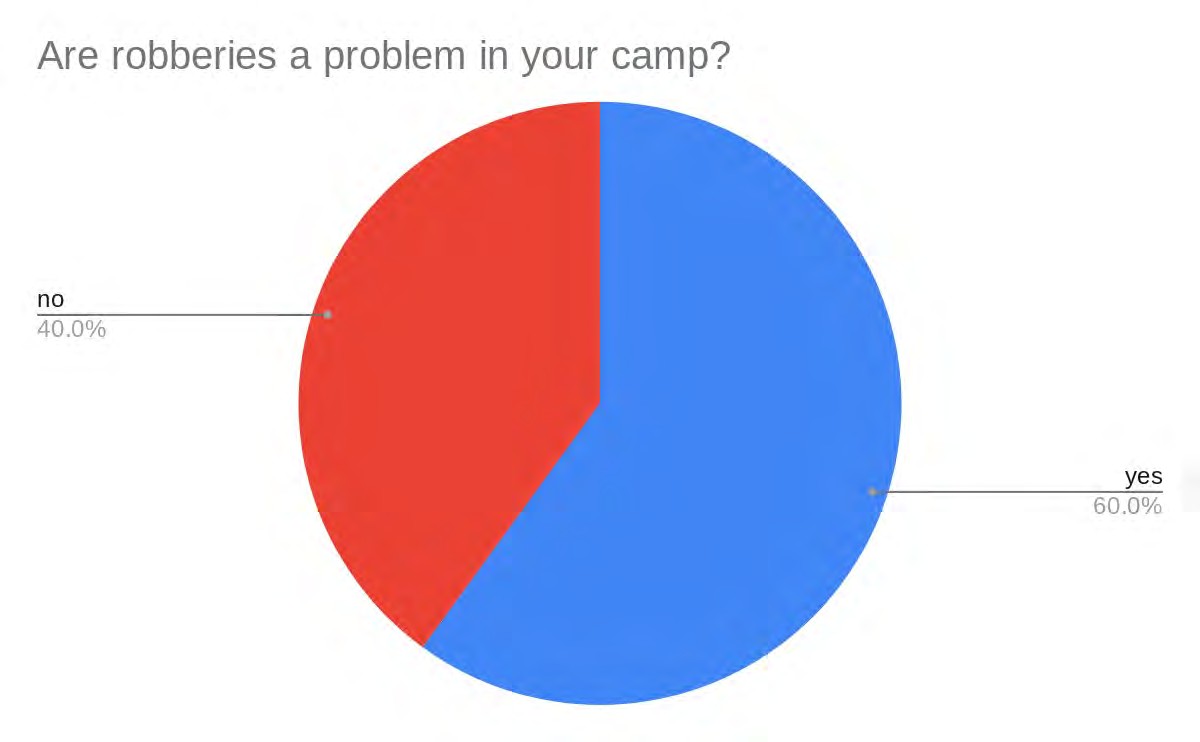
Robberies were listed as a common occurrence by several refugees interviewed by BHRN. Many expressed concern with the frequency it occurred, while others seemed to think of it as a fact of life they had to live with. Whether refugees were alarmed by the number of robberies in the camps or felt they had to accept them, it shows a worrying increase and normalization of crime that preys on the most vulnerable in the camps. Women were described as a frequent target and little seems to be done to offer better security for them to live their day-to-day lives without fear.
A thirty-year-old woman told BHRN, “Even a gas cylinder was stolen from our block yesterday morning. There is a person, his name is Ibrahim (name changed), whose shelter is close to mine. Last night, so many things and gas cylinders were stolen by cutting the plastic walls. When his wife reported to the CIC about the robbery, she was told that the Camp-In-Charge people could not do anything. He has about 8 daughters, he doesn’t have any money at all. Once, two thousand takas were snatched from me. I was working for TDH (Swiss NGO) before, as TDH is closed. One day, when I was returning from receiving my salary, a young man was asking me to go to his shelter, asking for money. So, I replied that I didn’t have any money, and where could I get money to give him. He said that I was coming back from receiving my salary. He was about to harass me by saying he would take me if I didn't give him money. So, I gave him money. He was trying to snatch my handbag. He was saying to give him the bag or go to his home with him. I escaped by giving him two thousand takas.”


More Rohingya refugees interviewed by BHRN were afraid of being robbed than those who felt that robberies were a problem in their area. Some attributed that fear to robberies being a problem in neighboring areas, more than in their own camp. There is, to an extent, an understanding that security is not ubiquitous in the camps and that some areas are more controlled by criminal elements than others.
When asked what types of crimes were most common in their area, fights, drugs, and domestic violence were the most common kinds listed, aside from arson which was a major issue during the latter period of interviews for this report. When combined, kidnapping and trafficking account for about as large a share of concern.

A 42-year-old man told BHRN, “There are gangs here who take people for no reason and torture them after blaming them for not keeping their secrets safe. They don’t inquire much and they just take people and torture. Their victims can’t even go to the authorities to complain against them because they threaten them. Another crime that is very common here is drug dealing. Since people don’t have incomes and they engage in the drug business. Though they get killed, they keep doing it.”
Frequently, refugees described drugs as a common type of crime and relate this to the younger generation losing their youth while they languish in the camps. There is a similar lament for youths drawn into criminal gangs, or lured by traffickers. Overwhelmingly, the refugees BHRN spoke to seemed deeply troubled by what is happening to the younger generation without prospects for education or hope for their future.
9Gang Activity
The issue of ‘gang activity’ is a complicated one for this report. The term was used in interviews and left intentionally vague to allow refugees more room to speak freely about groups they may otherwise not want to discuss by name. Despite this, more than 15% of refugees still declined to speak on the topic for fear of reprisals against them. Some of those interviewed associated ‘gang activity’ with criminal gangs or traffickers, while others clearly associated the term with militant groups present in the camps. With this being the case, some even spoke positively about ‘gangs’ inside the camp who they said they felt offered protection for them. Militant groups around the world have often garnered grassroots support by offering security and social services to the populations they represent and in that regard, it isn’t surprising that this is the case in the Bangladesh refugee camps as well. It is remarkable, however, that it is so easy for these groups to garner support from the public by offering services that security forces and authorities are placed there to provide. The failure to adequately protect civilians and address their grievances has left a void that was inevitably going to be filled by one group or another. This should be a cause for the Bangladesh government and NGOs to step back and reflect on what shortcomings allowed for this situation to emerge and what they can do to ensure it doesn’t happen again. If the situation is not adequately addressed, then more and more security voids will be filled by militant groups, criminal organizations, and vigilantes.

“Yes, there are some sorts of different gangs here, but I don’t know their names. It’s said that a few groups among them here are quite supportive of our community, as these groups protect people in the community from sneaky behaviors or robberies by Bangladeshi or Rohingya criminals. As there were no groups here before, and our girls used to be taken at night by the Bangladeshis. So, we think it’s good for us to have such groups here,” A 28-year-old male refugee told BHRN. The mention of Bangladeshis taking girls at night is a reference to widespread reports of traffickers kidnapping women and girls and forcing them into sex slavery in brothels in Bangladesh and possibly abroad. Reports of such kidnappings are common but BHRN was unable to speak with any family members of victims.
10Women and Girls’ Issues
Gender issues in the camps are an often neglected topic that is also extremely delicate to address. Refugees, including men, frequently described sexual and gender-based violence against women and girls as a major problem inside the camps. The poor overall quality of life and lack of education and employment opportunities were said to be contributing factors. Dangerous arranged marriages, kidnappings, street harassment, and a lack of security and protection were all major concerns for Rohingya women presented to BHRN.
On top of this, every single refugee inside the camps has survived a traumatic event, and there almost no adequate mental health services available to refugees. Instead, refugees have been left to languish in uncertainty about when they can return home, unable to support themselves and their families, and without any known prospects for their future. The culture of violence has worsened in the camps, and in many cases become a source of revenue. These factors combined lead to situations where women and girls become more vulnerable and more frequently targeted.
A 25-year-old woman told BHRN, “It’s not safe for us at all when the security forces are threatening to take us to Bachan Char Island and Baador Booñn. As a result of that women are feeling insecure, even inside the shelter. This is the first concern we have. Another thing is that there is no safety or security for women when they go to latrines or bathrooms at night. As a result of that, a lot of violence is being committed against women in the camps.”
She elaborated on other types of violence against women and girls in the camps, “There is domestic violence happening between husbands and wives. During the lockdown of COVID-19, many people had lost their jobs and work. People can’t go outside of the camp to work since the implementation of barbed-wire fencing. As they cannot do any work, they don’t have income. As they keep sitting inside shelters for twenty-four hours a day, many arguments and quarrels occur between them and their wives. As there is no security, and there are no latrines for women and girls only, many acts of violence occur when women go to use them at night. These two [types of] violence are most common in the camp.”
The issue of female hygiene products was also raised as an area of concern to BHRN when discussing medical supplies in the camps. It is a keen insight to include things like sanitary pads in the health needs of refugees that are not being adequately addressed.
The same woman told BHRN, “There are some things for women which we don’t get. For example, the clothes for women. There is something necessary for young girls which we are not getting now, but we used to get these things earlier. It’s been over one year, we are not getting these things (pads). In camp-15, [we need] the assistance with glasses, canes, etc for the elderly who struggle to walk. We heard these things are given in other camps, but not in our camp.”

11Arranged Marriages and Trafficking
BHRN spoke to several refugees who had family members trafficked overseas. The family members of women who were trafficked all said that they were being taken to another country where they could get married. Many of them said that they couldn’t afford the dowry in the camps and that an overseas marriage was a solution to this. The most common destination for women being trafficked for marriage was Malaysia but BHRN spoke to family members of women who went to India, Indonesia, and Thailand as well. The marriages were arranged by family members and plans for their travel were coordinated with traffickers or smugglers, that the families typically did not know. Often the prospect grooms were the ones who organized passage. Many of the family members who arranged these marriages expressed regret over their decision to try to smuggle their family members overseas and said they did not foresee the risks that would be involved.
A 30-year-old woman told BHRN about the repeated attempts of her two sisters, ages 18 and 14- years-old, to travel to Malaysia for marriage, “We have a brother who previously went. He took both sisters to get them married there. They had to return home from the boat two or three times. They suffered a lot because their clothes got torn up and there was no food on the boat. Some Indonesians provided them with clothes when they got off the boat in Indonesia, and they stayed in Indonesia for about one month. So, our brother thought his sisters would be defamed there and he somehow managed to take them to him. After one year, they found accommodation with him. They were on the boat for about six months. They suffered a lot as they didn’t even have any clothes. They suffered a lot. With the mercy of Allah, they are alive because hundreds of people who went with them died. For their survival, we prayed to Allah so much.”
The journey she describes includes a period of time where her sisters were stuck at sea and left adrift until they were found by Indonesian authorities. Events like those she described have made the news several times in recent years, where boats full of Rohingya refugees face engine failure, or traffickers remain at sea while trying to extort money from passengers’ family members. It is typical that passengers on these journeys bring only minimal supplies with them and dehydration, starvation, and illness become serious problems during the voyage. Refugees told BHRN that on these journeys people would become very sick or even die from only being able to eat uncooked rice over long periods of time.
A 35-year-old woman told BHRN about her two sisters, aged 25 and 19, who were trafficked to India by brokers for arranged marriages, “Both of them are living together. One of them has a husband with her. We got another married here, but her husband abandoned her. So, I sent her with another sister. Since our father has passed away, I thought that she would be ill-treated if I got her married in the hands of our brothers. So, I sent her with her sister...They are living in Jammu in India. They went with the help of the brokers. As they could not go on their own and they are just women, and they do not have any adult men with them...Yes, they faced many problems. Even, the clothes that my sisters were wearing were snatched completely. We gave them some money for the journey. Even this pocket money was stolen. Currently, my sisters do not have clothes to wear since all clothes have been stolen completely. The brokers tried to take my nephew and my younger sister to the forest, but spared them after being seen by others. My sisters faced many problems and suffered a lot. We had to pay a ransom to get my sisters released...Yes, my sisters were harmed by the brokers. The brokers sometimes kept them in the bushes, sometimes in remote houses, and sometimes in the paddy field. The brokers tried to sell them, but did not because we sent the money immediately. My sisters explained this to me while crying.”
The threat of being sold into slavery, including sexual slavery, and the risks of sexual violence, abuse and exploitation are horrifying elements of the trafficking enterprise centered in the Rohingya refugee camps in Bangladesh. The desperation of refugees to escape makes them easy targets for abuse and exploitation once they endeavor to leave the camps. Because women who choose to leave the camps for marriage often have less money or community support, they are even more vulnerable to this sort of cruelty. The trafficking routes to India are less frequently used than those to Malaysia and as such are far less likely to be monitored and reported on. Because of this, the potential for violence against women on these routes is likely to be higher. The routes to India also occur over land and often involve several different traffickers, each with their own agenda for the people they are moving.
It should be noted that some of the family members BHRN talked to described safe journeys for female family members where no one was harmed, abandoned, arrested, or extorted in the process. These, however, were a small minority of cases. Even in the safest scenarios, refugees fleeing Bangladesh are often arrested in the countries they flee to and held in immigration detention centers.
A 43-year old woman told BHRN about how she sent her 18-year-old daughter to Malaysia to be with her husband, only for her to be arrested when she arrived, “She is my daughter who went abroad. She would be over 18 years old. I don’t remember it exactly because our documents were burnt down in Myanmar. I don’t know what age she said in the prison. She went there 13 months ago. I sent her to Burma from Bangladesh. From Burma, she went there (Malaysia) via Rangoon. She is in prison now as she was detained while boarding the vehicle to Malaysia. They had been married for three or four years. We fled to Bangladesh, but she wasn’t included in the data card here in order to be able to go to Malaysia. After she arrived there, her husband went to visit her in prison once, but couldn’t visit her again due to COVID-19-related restrictions and lockdowns. The first time, he visited her and talked to her for one hour after bribing the officers. The second time, he could talk to her across a glass partition. Now, he can’t even go to see her, though he sometimes sends money.”
A 38-year-old woman told BHRN about the pressure she felt to marry off her daughters and the struggle to do so without money, “I want to get one of my daughters married. If I don’t have enough money or I am unable to pay for the dress and things for my son-in-law to be, then I won’t be able to get my daughter married. It is customary for the parents of the bride to present their son-in-law with gifts. If I am not able to give an iron box with some sets of clothes for my to be son-in-law, I can’t get my daughters married. People with enough money are giving household items including furniture, cupboards, and plunk.12 Since I don’t have that much money, my daughters are staying unmarried. Only girls whose parents can afford to pay a dowry are getting married. When parents can’t afford to pay for their daughters’ dowry, girls end up getting older without getting married.”
The pressure on a refugee community to find money to ensure their daughters can get married is overwhelming for many who lost everything when they fled Burma. Some refugees listed the dowry system as something they wanted to see reformed in the refugee camps. Though dowry is a regional issue, rather than a religious one, the topic is still sensitive for many. As such, there is no significant momentum to address the issues this system imposes on women and girls, or work to change it.
The same woman told BHRN, “If someone comes with a marriage proposal for one of my daughters, I can’t afford the expense of the wedding. Dowry is demanded for the wedding. I have three mature daughters in my family. One of them has hit puberty after arriving here from Myanmar. We are in a difficult situation.”
This system values individual women according to the income of their families. This is especially harsh on refugee families and creates an environment where daughters are seen as a burden. Little regard is given to these women’s independence and worth. Similarly to how traffickers prey on these women and girls’ desperation, some men have been accused of exploiting this situation to marry multiple women or girls.
A 25-year-old woman told BHRN, “Yes, it’s very difficult for us. As we have not been repatriated to Myanmar and have been living here for years, there are households in our community with four or five young girls, and their parents can’t manage to get them married and they are having many problems. They have to give gifts (dowry) for their weddings or the girls will get old without getting married. Married men are becoming polygamists and use their power and money to marry young girls.”
In this situation, men with money use their power to convince poor families to marry off their women and girls as additional wives. At the core of this, women are coerced into accepting polygamy because they are financially dependent and not able to make autonomous and free decisions. If it wasn’t for the dowry system, many of these women would likely not have entered such an arrangement because they would have had far more options available to them.
12Trafficking and Kidnappings
Trafficking remains a serious issue in the camps. The situation of women trafficked for marriage, as detailed above, is a key aspect to this issue, although men also continue to be trafficked out of the camps to third countries by the same groups. Typically, men who are trafficked leave because they have become desperate for their families to survive and believe they can find work in Malaysia. Most of them understand that entering this agreement involves some degree of risk but the full extent of danger does not seem widely known.
Traffickers often ask refugees to pay a sum for their journey, to be paid in two installments. Some agree to pay their remaining debt to the brokers with money they believe they’ll make once they arrive in Malaysia. This sort of arrangement has been used to trap trafficked refugees in modern slavery or as leverage to extort their families for money after they’ve left.
A 30-year-old woman told BHRN about her 17-year-old son, “We had no idea before that my son would have faced that much suffering. Now, we have come to know about the suffering there, so we will never put our children in such a difficult situation ever again. My son faced many difficulties. But he is there now as it is Allah’s will for him to get asylum. I heard he is learning there. I am only 30 years old, and he is my eldest son. I have three daughters younger than him. We had forbidden him from going there, but he secretly went as he thought that we had faced hardship in Myanmar as well as in the camp for long enough. As his uncle made him greedy, he went there. I actually didn’t send my son intentionally. He just told me to pray for him when he was about to go aboard the ship with his uncle’s family. My son suffered from being adrift on the water for many days, and we gave the money when we were asked to give it in order to get my son on the shore.”
A 30-year-old man described the journey of his 19-year-old sister and cousin, ‘Yes, the brokers contacted us. They used to visit us frequently before taking my sisters. They asked us to pay 2.5 lakhs kyats as a fee. So, we had to pay 5 lakhs for both my sisters. We convinced the brokers to accept 4 lakhs and 80 thousand kyats. It was asked to give 1.5 lakhs as advance for each of them. Their to-be-husbands from Malaysia remitted 3 lakhs to the brokers, so they took my sisters after getting the money. Those brokers didn’t contact us anymore, and my sisters were mistreated in different ways, notably by being left starving in the mountains for about two months. So, I am always telling the people in the camps not to send away their daughters like this. That’s why the brokers are afraid of talking to us or coming to the camps as they might be beaten up here.” The predatory nature of the traffickers and the vigilante response of refugees were predictable and avoidable. The same cycle is likely going to continue but intervention by Bangladesh authorities, the international community, and NGOs on the ground could reduce the severity of the problem. If refugees' basic needs are better met, the ability to work and travel freely is granted, and a path for them to return to Burma or be resettled into a third country is genuinely pursued, the desperation making refugees to try to flee through traffickers would be drastically reduced. What is lacking is the sense of urgency among decision-makers to galvanize the support needed for change to happen.

Trafficking and kidnapping sometimes can be linked, in part because people who think they are dealing with good-hearted smugglers end up stuck with traffickers who sell them into slavery and extort large sums of money from their families. There are also instances where people leave with traffickers without informing their families.
A 60-year-old man told BHRN, “Many people come to the block and claim to take people to Malaysia, Saudi Arabia, etc..., and ask for money from our people saying they are working to take people abroad. When we find this matter, we solve it by prohibiting our people [from coordinating trafficking], but they( the traffickers) endanger our people by taking when we don’t see.
Aside from trafficking, there are constant reports of kidnappings throughout the camps. Some of these kidnappings are ransom schemes by local criminal gangs, while in other cases women and girls kidnapped and forced into sexual slavery at brothels, though BHRN was unable to verify this information. One of the most well known trends of kidnapping is related to conflicts with militant groups, particularly ARSA, who have kidnapped individuals perceived as enemies. Refugees have also told BHRN that ARSA has kidnapped young men with particular skill sets they wanted to recruit, as a form of forced conscription. Refugees are understandably very apprehensive to talk about these particular kidnappings for fear that they may be kidnapped or harmed themselves. The lack of viable livelihood options for refugees has made trafficking an attractive option, or at least one that they see as a possible way to escape. Without any plan for repatriation to Burma and no process to repatriate refugees in a third country many will continue to feel as though there is no escape from their situation without drastic action.

13Arson Attacks
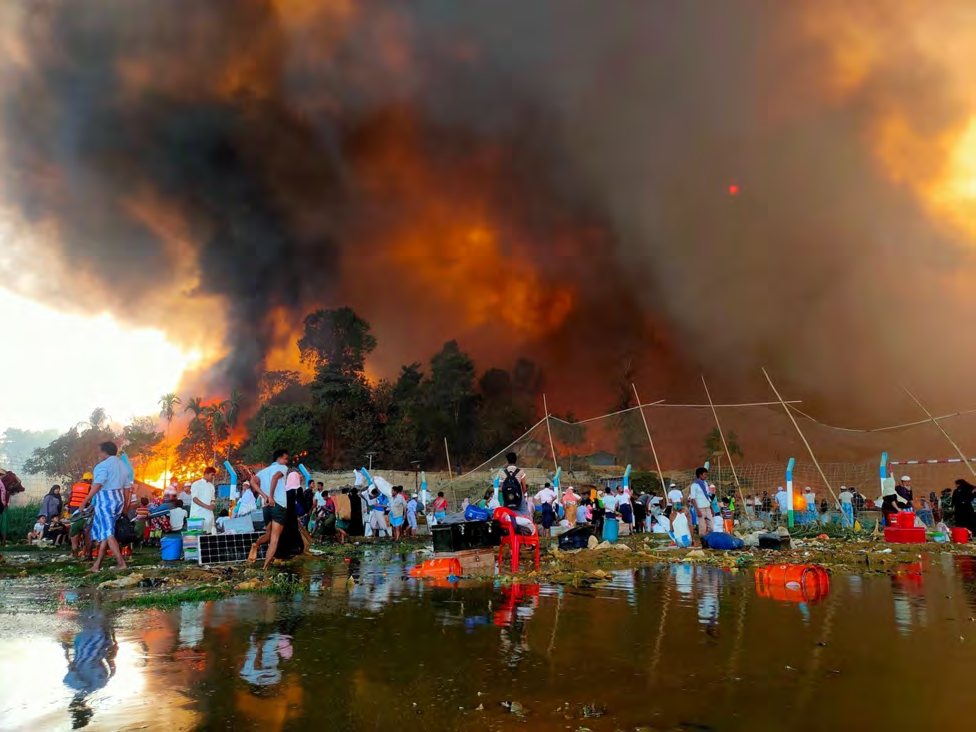
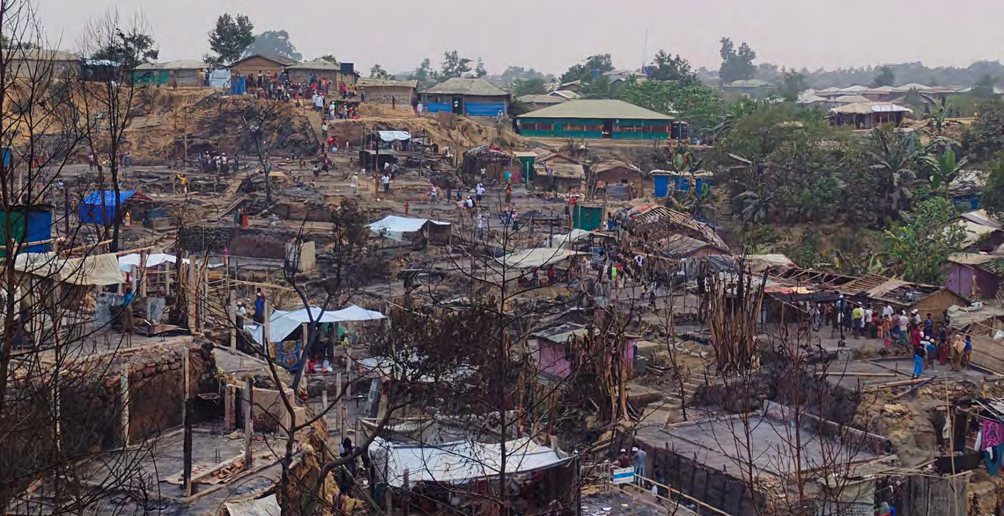
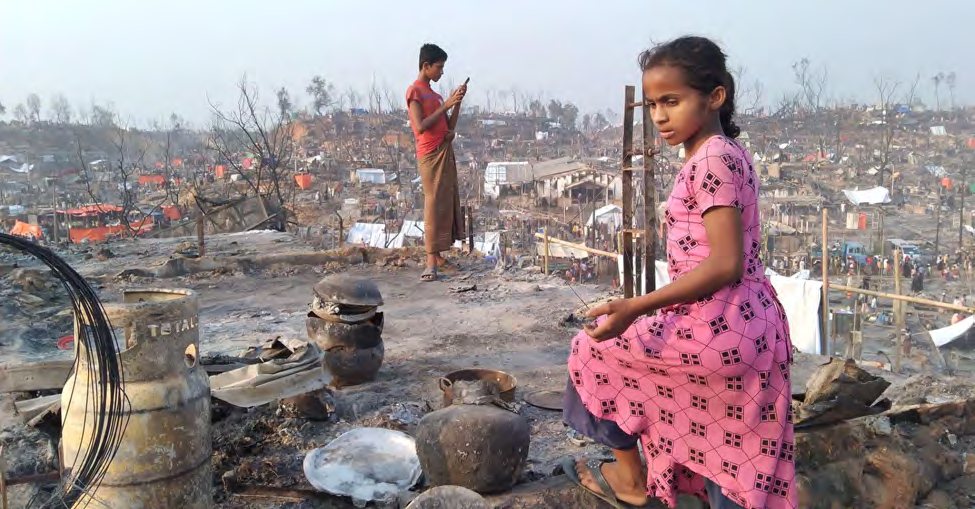
In March, refugees had a sudden shift in their primary concern when interviewed by BHRN. Arson became a topic of great importance after several fires broke out in the camps, with the most notable instance happening on March 22nd where 15 people were killed and thousands lost their homes. Other fires broke out in crowded areas with witnesses claiming to have seen members of the host community igniting them. While this has not been independently confirmed, the fear among refugees is very real. Several refugees told BHRN they could not sleep at night because they were afraid fires would be set in their camps. They said they also had no faith in Bangladeshi authorities to investigate or prevent the fires and some said they felt authorities may turn a blind eye to them hoping the fires would force refugees to return to Burma.
Smaller fires continued to break out at seemingly random spots throughout the camps causing the community great anxiety that another large fire could occur and pose risks to their lives and properties. The arson attacks seemed to stop once Ramadan began on 12 April.
While the circumstances surrounding the fires could not be established, what is clear is that a dangerous situation materialized inside the camps and the residents started living in fear of the community hosting them and the authorities assigned to protect them. This situation alone requires immediate attention and significant efforts to mediate and establish trust and cooperation.

“As fires are set everywhere, our people have to stay up at night in order to guard, and are unable to sleep during the day or at night. We are very worried when thinking that a fire could be set up somewhere” A 55- year-old woman told BHRN.
A 47-year-old woman told BHRN, “The current situation in the camp is very difficult. The summer has come, and we are suffering from the heat. It’s also hard that shelters are being set on fire. The situation is very serious with the fires in the shelters. Balukali was burnt down. Intentional fires are appearing in different areas here. We can’t sleep at night. We stay up. So, we are just sad about these events.”
A 40-year-old woman who lost her shelter in an arson attack told BHRN, “The Humanitarians provide some rations of spoiled foods which we somehow eat after washing them. We don’t get rice. The shelters have been set on fire and we couldn’t even save a single item of clothing or anything. I was even about to get burnt. We could also have been killed in the fire. Somehow, Allah saved our lives. All the things have burnt down, so how can we cook and eat? We aren’t getting rice and other things. The Humanitarians provided some packs of cooked rice but they were inedible. The people who have relatives, sometimes they provide support and sometimes they don’t. We live on our own. In particular, we are in hardship with food and clothes as well. We cannot even take a bath. You can see how dirty-looking I am with only the one dress left that I am wearing.”
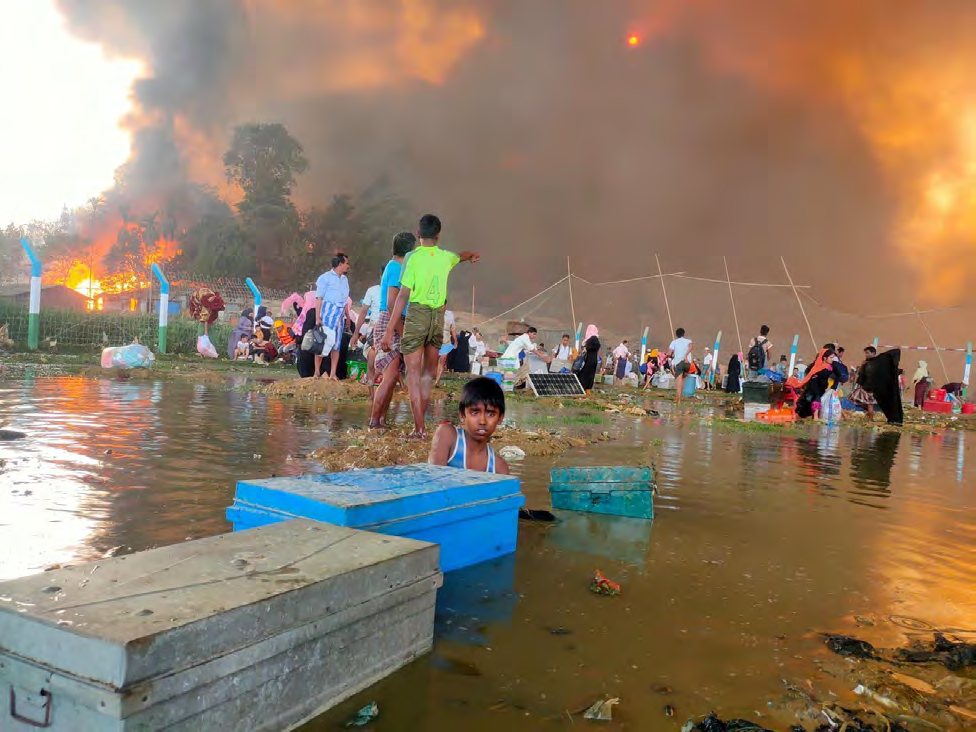
The same 40-year-old woman told BHRN, “As you are staying in the camp, you also know that fires are being set everywhere. Our shelters have been burnt down as well as all of our things. Everything we had. We had some jewelry that was kept in an iron box that was lost in the fire. We are always stressed since our shelter burned down. We can’t sleep now. We weren’t tortured by the Myanmar government in the way we are being tortured here. It’s often heard that the fire is set in a place. After some time, it is set in another. As a result, we have to stay awake. If a person can’t sleep nor eat, and is also stressed, then what do you think the person will be like?”
14Quality of Life and Hope for the Future
In interviewing refugees, BHRN asked several questions related to their quality of life and how they saw their future. Many of their answers showed how significantly the events of recent years had impacted their morale, but most retained some hope for the future.

When asked to describe their current situation the vast majority of refugees gave a negative description of their lives in the camps. Their grievances ranged from day-to-day discomfort, food insecurity, dangers in the camps, and a sense that life cannot continue this way for them. The common dangers they listed included criminal activity in the camps and a distrust of the police assigned to protect them.
A 27-year-old man told BHRN, “Though I felt safe earlier when the Bangladeshi Army was responsible here as the security for us, now the camp has become a fearful prison where we are helpless. Our situation is worse today than yesterday. The situation has become quite critical. We are afraid of the Bangladeshi police because they are collaborating with criminals against our safety and security. I think they are doing this so that we go back (to Burma) without any rights.”
The distrust of police in the camps was commonly expressed. Even some of the refugees interviewed who said they felt the security forces kept them safe also expressed some concern about extortion and the heavy-handed tactics used by the police when seeking out suspects. Those in the camps are in the unenviable position of needing security while having to live in fear of them at the same time.

Among the greatest concerns refugees had, lack of work and income was the most common. While refugees were also lacking adequate rations, most were more concerned with finding a way to support themselves than they were with improving NGO services on the ground. The second-largest concern was over arsons in the camp which were a major problem in the late winter and early spring of 2021.

It is notable that of all the concerns refugees could have, the desire for autonomy and freedom to work was the most pressing. While living amid violence and uncertainty, refugees wanted above all to have a chance to return to their normal lives. The restrictions on movement and work in the camps have made this impossible for most and with each year that passes their lives are slowly being taken away from them. Without intervention, the refugees who came in 2017 may suffer a similar fate to those who came in the 1990s and see their children grow up never knowing life outside of a refugee camp.

To get a sense of what refugees held as their hopes and needs, BHRN asked them what changes they hoped to see in the next year, as well as in the next five years. Overwhelmingly for both questions, refugees said they hoped to go back to Burma. Usually, other desires were listed in the event that they couldn’t go back to Burma.
An elder woman told BHRN, “All I want is to return to Myanmar. I just want to go back right now if it’s possible. We cannot go elsewhere. All we want is our own native country. Enemies are behind every person here. So, whenever I want to move from this area, I worry I will face problems from an enemy.”
The distrust of others in the camp is not surprising. People live in overcrowded areas with strangers while crime and violence often go unchecked. The desire to go back to Burma also involved a desire to return to communities where people knew their neighbors, worked together and had some sense of trust among themselves. Life in Burma, while severely restricted, had some possible options for Rohingya to earn income and have stability in their lives. Without this, crime has become a more common and accessible option for the younger generation. Similarly, drugs have become a problem in the refugee camps which was an issue Rohingya seldom dealt with in Burma. The most popular drug in the area is Yabba, a mix of amphetamine and caffeine that has been trafficked on the border of Burma and Bangladesh for years. The popularity of drugs and drug dealing was mostly unheard of among the Rohingya in recent years, but as desperation and organized crime in the camps grow, it is not surprising that drug use has increased as well. The remedy to this, like most problems mentioned in this report, is to address the root causes of that desperation while also offering support and services for those who may be addicted.
A 47-year-old woman told BHRN, “In the future, we want to return to our native country. We have many problems with our shelters here. Our shelters are close to one another, and fights are happening among us. Shelters are so crowded. If someone pees, it spurts to another one. Because of this, fights are happening. We are in a very difficult situation here. We would be happy if we could go back to our country. It’s very important for us to provide our children with education. When these things happen, we will be happy.”

A 24-year old man told BHRN, “Staying in these refugee camps for five more years would normally be a punishment for us. No matter how much support and services we get here from the government and humanitarians, we can’t be fully satisfied because this is not our native country. We always feel unsafe because we are not in our own country. So, the only change I want is to be repatriated to my own native country. If this can’t happen in the next five years, we have no choice except to stay here. If we have to stay here, we would want more security and opportunities for us with our livelihood. We are also humans, so we can’t just live on the support being provided here. We also have dreams and feelings to live up to and [we want] to make money to support our families as everyone else does.”
A 30-year-old woman told BHRN, “We would be happy if we are able to return to Myanmar in the next five years. We request you to provide us with sufficient rations. The rations have decreased very much recently. We want to receive enough rations.”
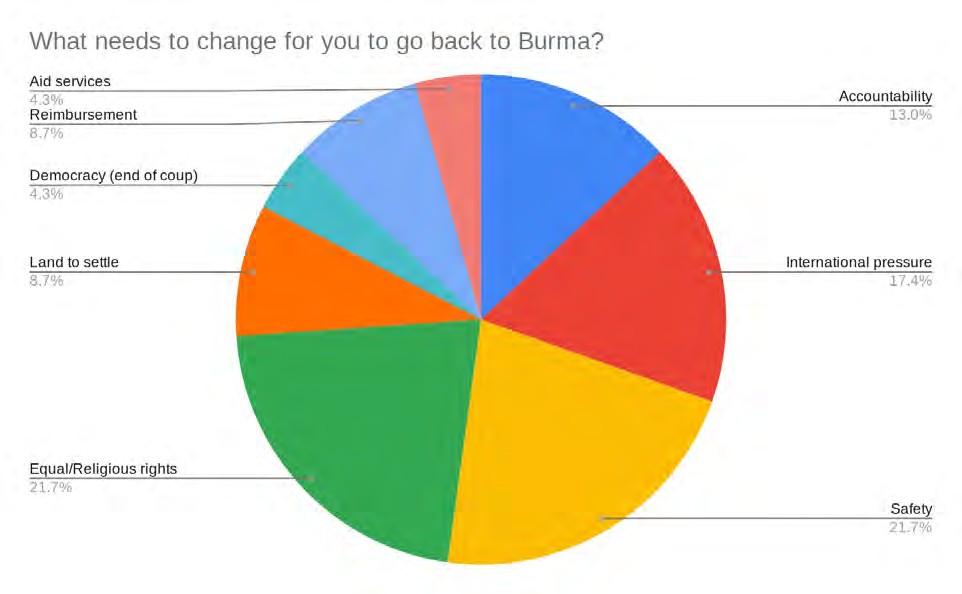
When asked what needed to change in order for them to go back to Burma, the Rohingya refugees interviewed by BHRN listed several practical changes they felt were needed. The majority said equal rights and safety had to be ensured for them to be able to return. International pressure was raised as a requirement several times, implying that nothing could change if the world didn’t raise serious pressure on Burma to equitably return refugees to the country. Accountability was another frequent concern, typically tied to the international community pursuing charges against the Burmese army through the International Court of Justice or International Criminal Court.
Some refugees mentioned the need for reparations or land to settle as a requirement for them to return to Burma. The Rohingya who fled Burma left everything behind and these properties were often destroyed or taken over. Others left livestock and valuables behind that they can never get back. It is logical as a practical matter as well that those returning to Burma will need land, homes, and some financial means to restart their lives.
A 40-year-old woman told BHRN, “At least we would be able to live at our own home place in Myanmar. We would be able to provide education for our children. We think it would be safer for our lives there than here. It’s not safe for our lives here. The children aren’t getting proper education here. We cannot sleep well. We are often worried about arsonists. Though our houses were burnt down in Myanmar, we were still able to bring our jewelry. We couldn’t save any single or minor thing from our burning shelters here. We couldn’t conceive that we would be tortured like we are here. All of our things have been burnt down here, so we aren’t able to live. We cannot live on their lentils and rice. It’s said that we won’t be able to sell at shops here anymore. First of all, there shouldn’t be any discrimination against us. Second, we should be recognized as citizens as other ethnic groups are. Now, the violence which is currently committed against Buddhists or Muslims by the government in Myanmar should stop. The government committed violence against us first, and it is committing violence against the Buddhist people.13 We cannot trust that they won’t torture people anymore. Now, the democracy has been hijacked by them (the Burmese army) and they are planning for a military government. This should also be stopped. Our country should be democratic for us. Our lands and properties should return to us. If these are done, we would return there. Otherwise, we wouldn’t return. There is one more thing for not returning to Myanmar. We are tortured more here. We should be able to stay here and be as happy as we were before we arrived here. The Bangladesh government planned to torture us like this through other people. We shouldn’t be in this difficult situation if we are kept the way we were before. We fled here because we were facing violence in Myanmar. If we also face violence here, all we can do is commit suicide.”
A 24-year-old man told BHRN,” I am not so knowledgeable that I can suggest to the world on how to work on return. But after staying here for over three years, I have to say that the process and attempts to get us back to our country are not as effective as they should be. I think the world should pay more attention to our case. The world should create a fact-finding team of experts and implement them to find out the facts behind the genocide and violence against us in Myanmar. They should take steps based on what they find. The world should put more pressure on the Myanmar government. We know there have been barriers keeping our repatriation from taking place, such as the COVID and the military coup. The world should get control over the situation, and work actively on our case. We are sure the Myanmar government is trying hard to hinder our return but it has to abide by international law. To do this, the international community knows best what they should do.”

Every refugee BHRN spoke with said they wanted to go back to Burma. Some explained what it would take for them to feel safe to go back while others said they would go back now if it was possible. Many of those interviewed also commented on how they felt the process to get them back home had not been pursued strongly enough by the international community and how the military coup in the country might make this worse. Despite the atrocities committed in Burma against them, Rohingya refugees still see it as a place of hope and a home worth returning to.
The same 24-year-old man told BHRN, “We don’t just want to go back to Myanmar. We have been longing to return there. But we would return there as long as we can fully enjoy our rights. Otherwise, we would rather die here than return there without rights. 99% of us would consider this question to be a stupid one since all of us have been longing for it.1% of the people are those who had always been underprivileged by the Myanmar government forces. It got so hateful for them to be in Myanmar and they are traumatized and unable to understand the situation. That’s why they [would] say that they don’t want to be repatriated back to Myanmar.”

While the majority of refugees interviewed by BHRN said they thought they would go back to Burma at some point, about a quarter said they didn’t think it would happen. Life in the camps, the failure of the international community, and the absence of any likely plan to return refugees all contributed to disillusionment. Those who felt they would go back were also pragmatic about what must happen first in order for them to return and the obstacles that remained in their way.
A 27-year-old man told BHRN, “Yes, I think we'll be able to go back to Myanmar if the international community addresses our situation and helps to ensure a purely democratic government in Myanmar. Otherwise, I’m afraid that Myanmar will be like another Syria.”

BHRN asked refugees if they felt hopeful about the future to gain insight into how their situation has impacted their outlook on their own futures. Despite all the difficulties they faced, most said they were hopeful. Usually, they said what in particular they held onto to maintain their hope, like the prospect of returning to Burma. A little over a quarter of refugees said they did not feel hopeful about their future, usually crediting this to a sense that they cannot return to Burma and that their lives will have to continue as they are now in the camps.
A 38-year old woman told BHRN, “No, I don’t feel hopeful about our future. Even, I have turned less hopeful about our return when people are saying that it won’t happen. I became less hopeful when people said we will not be repatriated to Myanmar soon. We might not be repatriated ever. We think we are not able to return there because Allah has not wished for it. No, we don’t feel [hopeful] about anything. We hear that the Myanmar government is arrogant, and can’t even be summoned to any court. So, we don’t think we can be repatriated there.
A 47-year-old woman told BHRN, “It would be very better for us if we are settled in a third country instead of Myanmar. This is what I am hopeful about. If we live in Myanmar, its government tortures us, burns our houses, kills our people, and doesn’t let us live peacefully. If we return there, we can’t stay peacefully. We are not living here peacefully. So, I think we would be at peace if we were settled in a third country. Because of these issues, we are looking for peace.”
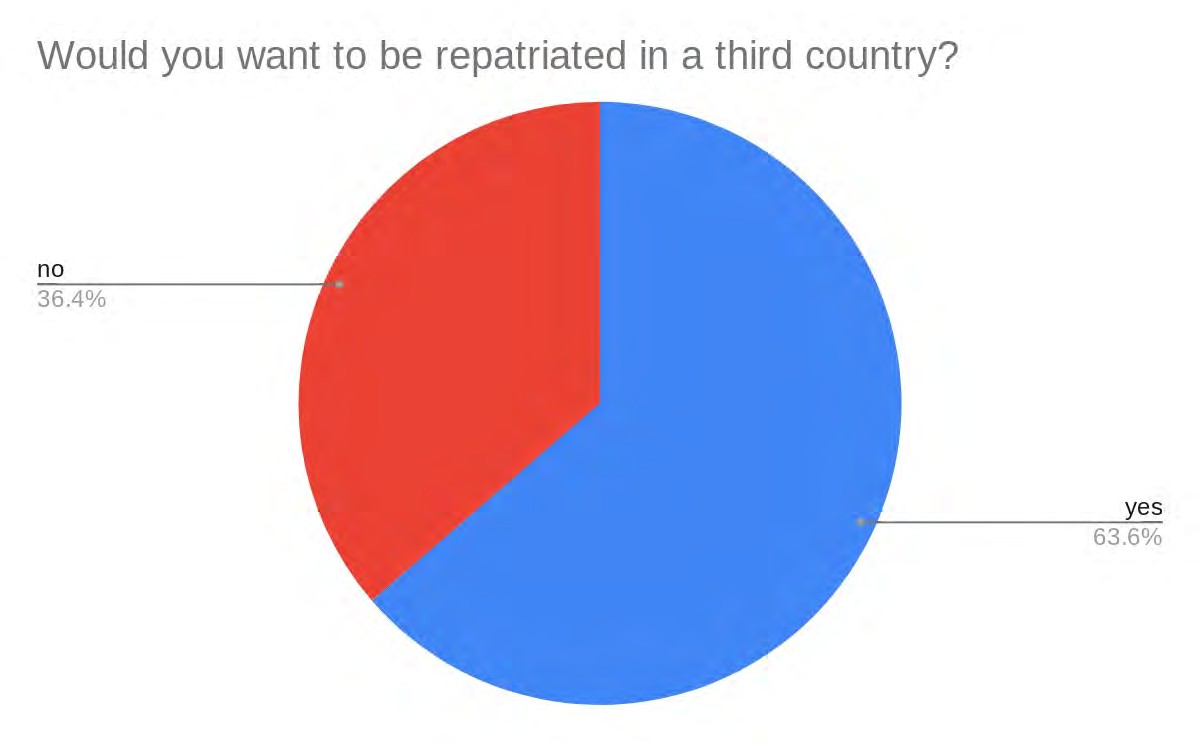
Many refugees in the world are able to apply for resettlement in third countries while living in refugee camps, but this is not the case for the Rohingya refugees in Bangladesh. In the early 1990s Rohingya were able to go through the process of resettling in third countries, but Bangladesh ended the program without clarification. This policy has worsened the quality of life in the camps and encouraged refugees to undertake unsafe passage with human traffickers for a chance at a better life or being able to settle in a country which will allow them to be resettled. When asked if they would want to be resettled to a third country, over 63% of refugees said they would. Some even said this would be the best option for them because they feared the Burmese military would continue to persecute them if they returned. Yet, 36% said that they would not resettle into a third country because they only wanted to return to Burma.
A 38-year-old woman told BHRN, “Yes, we would want to be resettled into a third country. We are ready to be resettled into a third country. If we can’t return to Myanmar with the resolution of our case, we are ready to go to another country.”
A 26-year-old woman told BHRN, “We would go to a third country. It’s said that four or five exoduses from Myanmar had already happened, but we hadn’t seen those. They said that four or five exoduses had happened in our ancestors' times. Because of the violence, people had to flee. So, it would be better for us if we could go to foreign countries.”
A 40-year-old woman told BHRN, “Yes, of course. We are supposed to say that. Our ancestors had been tortured and become refugees in Bangladesh. Some of our people died here and some others died there. Like this, our people are getting destroyed. We are supposed to ask [them] to resettle us to a third country. We would give an agreement not to do or say anything. All we want from the world is to take us to a third country. We hope the world will take us to a third country.”
15Conclusion
For over a million Rohingya refugees living in Bangladesh, the future is uncertain and the present is monotonous when it isn’t dangerous. They often feel forgotten by the world and trapped in the aftermath of a one-sided conflict they were the victims of. They see dangers in the community hosting them, the police assigned to protect them, and too often even among themselves. Their situation has been approached coldly and politically, told too often that the basic rights they seek are unobtainable or that their pursuit lacks pragmatism. People speak on their behalf often and give them little of what they ask for. It was the intention of this report to ensure at least in part that their voices could be amplified and they could speak directly about their own aspirations, fears, and needs.
Practical steps can be taken in the short term to help ease these problems and improve the quality of life of the refugees living in the camps. Relations between refugees, camp authorities, and police should be addressed in a way that seeks to build trust and cooperation and reduces fear and unease. Corruption at all levels should be investigated and addressed, and policies that unfairly criminalize mundane behavior like owning cell phones should be ended. Serious crimes should be addressed with greater urgency and the protection of the most vulnerable should be prioritized in the camps. A greater deal of transparency in these matters is desperately needed as well in order to establish trust between the refugees and authorities.
However, the greatest difficulties the Rohingya face in the camps often stem from denials of basic rights and opportunities and require more time and investment to be adequately addressed. Because the Rohingya in the camps can not work or move freely they are forced to endure years of poverty without a chance to improve their own situation. As access to education is limited, children growing in the camps lose their youth and the chance to pursue greater aspirations. These failures create voids in the community that are too easily filled with crime, militancy, desperate decisions, fear, and exploitation. The sadness and anger so many feel comes with few healthy outlets to process what has happened, and almost no chances to improve their station.
Allowing for freedom of movement, the right to work, the enjoyment of the universal right to education, and the ability to resettle into a third country would play a vital role in improving the morale of the community, the refugees quality of life, and growing an economy which would also benefit the host community. Although most people see the world’s largest refugee camp as a burden for the international community, such a camp has the potential to be an opportunity for growth, innovation, education, and hope. The approach has long been one that seeks to help refugees survive, but has never been one which sought to help them thrive. The cultural changes required for this to happen must come from the top down in order to be effective. They must also listen to and take seriously the concerns, hopes, and needs of the community they’re mandated to help.
16Recommendations
1To the Government of Bangladesh
- Bangladesh should create a process for refugees to apply for permits to work or seek higher education outside of the camps.
- Bangladesh should allow for greater freedom of movement of refugees inside and outside the camps. All barbed wire fencing or other dangerous barriers in and around the camps should be removed.
- Bangladesh should begin cooperation with the international community to resettle Rohingya refugees to third countries.
- Bangladesh should take measures to investigate corruption among security officials in the camps, and initiate programs to create better relationships between security forces and the refugee community.
- Security officials should increase their presence in areas dominated by criminal organizations or armed groups and ensure the safety of the community. In doing so, they must also ensure they do not arbitrarily harass, arrest, or harm civilians.
- Arson or similar crimes against the Rohingya community must be thoroughly investigated and the authorities must be transparent about their investigations to foster the trust the community places on them.
- Bangladesh should stop criminalizing non-criminal acts by refugees, like using a cell phone, and security officers should be instructed to treat refugees with respect and dignity. Acts of mistreatment by law enforcement agents should be investigated and perpetrators of violations and abuses should be held accountable.
- Camps-In-Charge should listen to and address the concerns of all refugees in their care and not only to the community and religious leaders. This need is particularly acute amongst women and girls in the camps.
- Additional security measures and protection mechanisms should be established for women and girls living inside the camps and programs must be introduced to address sexual and gender- based violence, including trafficking, harassment, and sexual violence. These programs should work directly with women and girls in the community, seeking their insight and input, and address their concerns as they arise.
- Latrines in the camps should consistently be designated by gender and women’s latrines should always be well lit with regular security patrols at night.
- Law enforcement should deploy greater efforts to combat trafficking rings that extort and exploit the refugee population.
- Bangladesh should recognize the democratic forces in Burma and work with them on a plan for the voluntary and safe return of the Rohingya population, once the relevant conditions and guarantees of non recurrence will be in place for such return to happen.
2To the International Community
- The international community must exercise diplomatic efforts with Bangladesh to allow for the resettlementriation of Rohingya into third countries.
- The international community must work with the UN to increase the food supply for refugees while also working with Bangladesh to develop livelihood programs that will reduce dependency on aid over time.
- The international community must work with the UN and Bangladesh authorities to develop adequate and sufficient healthcare options for Rohingya who become sick or injured, including women and children. These programs should also help to train staff in the camps and neighboring communities on how to establish a relationship of trust with patients.
- The UN and countries with strong human rights records should work with the Bangladesh authorities on training for security forces in the camps to ensure a safer environment for refugees.
- UN agencies and NGOs operating inside the camps should increase their efforts to address sexual and gender-based violence and trafficking inside the camps.
- Ensure that hygiene kits responding to the needs of women and girls are made available to the community.
3To the Government of Myanmar
- The National Unity Government must present a clear plan on how they will facilitate the safe and voluntary return of the Rohingya, that includes recognition as an ethnic group, full citizenship, and equal rights.
- The National Unity Government must ensure that any plan to ensure the safe and sustainable repatriation of Rohingya refugees includes steps to return them to their places of origin and provides reparation for their lost and destroyed properties, as per international standards.
- The National Unity Government should develop and present a plan for how they will reconcile the Rohingya and Rakhine communities that will allow both groups to live peacefully and have a chance to prosper.
17Annex I
Question SET 1
The first set of questions were asked of random refugees from several camps. Interviewers asking these questions were asked to seek out a diverse range of refugees in regard to gender and age. As interviews proceeded, interviewers were asked to find more female participants to ensure that their voices could be prominent on the issues they were facing.
- Name
- Age
- Gender
- Number of family members they live with
- What township they came from Rakhine
- When they fled Burma
- Where they are currently living in the refugee camps
Humanitarian assistance including healthcare
- What rations are you provided with in the camp?
- How often are you provided with rations?
- Who provides your rations?
- Do you receive enough food to feed your family each month?
- Are there any problems with the rations you receive? If so, what are the problems?
- Do you receive any supplies for health care?
- How often do you receive these supplies?
- Who provides these supplies for you?
- Are there any items that you need that you are not able to get?
- Have you received any supplies to help protect you against COVID-19?
- When you or a family member are sick or injured is it difficult to obtain healthcare?
- Have you been sick or injured in the past year? If so, can you describe your experience seeking access to healthcare in the camp?
Security and Safety
- How would you describe the safety of the camps over the past year?
- Have you had any interactions with security in the camps over the past year? If so, could you describe them?
- Do you feel protected by the Bangladesh security forces and camp authorities? If not please explain why.
- Is violence a problem in your camp? If so, can you give examples of the kinds of problems happening in the camps?
- Is criminal activity a problem in your camp? If so please give examples. Is there a problem of gang activity in your camp? If so please give examples.
- Are robberies a common problem in your camp? Have you been robbed?
- Are you afraid of being robbed in your camp?
- Are kidnappings a problem in your camp? Has anyone you know been kidnapped?
- Are you afraid of kidnappers in your camp?
- What could the Bangladesh security forces and camp authorities do to help you feel safer inside the camp?
- Is there any additional information you want to share with us?
Question SET 2
The following questions were asked of refugees who had family members trafficked from the camps. Because these questions were for individuals who had undergone certain events the participants were chosen based on their experiences rather than at random.
- Name:
- Age:
- Gender:
- Number of family members in the household
- Where do you live currently (camp number):
- What township did you live in Rakhine:
- Who from your family was kidnapped or trafficked? How old were they?
- When were they kidnapped or trafficked?
- How were they kidnapped or trafficked? (for example: “By boat” or “They were tricked into going to a place”)
- Where is your family member now?
- Do you know if your family member was harmed by the kidnappers or traffickers?
- Are you in contact with your family members now?
- Have the kidnappers or traffickers contacted you? If so, are they still contacting you?
- Are the kidnappers or traffickers part of a gang or organization?
- Are the authorities aware that your relative was kidnapped or trafficked? If so, what have they done to help?
- How much of a problem is kidnapping in your camp?
Question SET 3
The criteria for this set of questions was the same as the first. The questions in this set were written with the data from the first set in mind in order to gather more specific information on the topics already covered.
- Name
- Age
- Gender
- Original Township in Rakhine
- Current Residence
- How would you describe your current situation in Bangladesh?
- What concerns you most about your current situation?
- Is there a problem with crime in your area?
- If yes, what is the most common type of crime in your area?
- Do you feel safe in your area?
- What change would you like to see in your life in the next year? What change would you like to see in your life in the next five years?
- What do you think needs to change for you to return to Myanmar?
- Do you want to go back to Myanmar?
- Do you think it is likely you will be able to return to Myanmar in the coming years?
- Do you feel hopeful about your future? Why?
- What would make you feel more hopeful about your future?
- Would you want to be repatriated to a third country?
Footnotes
- “Remembering the Rohingya Exodus.” Reuters, Thomson Reuters, 24 Aug. 2020, www.reuters.com/article/us-myanmar-rohingya-graphic/remembering-the-rohingya-exodus-idUSKBN25K0W ↩
- Jazeera. “Several Killed in 'Gang War' at Rohingya Camps in Bangladesh.” Drugs News | Al Jazeera, Al Jazeera, 9 Oct. 2020, www.aljazeera.com/news/2020/10/9/several-killed-in-gang-war-at-rohingya-camps-in-bangladesh . ↩
- Hölzl, Verena, et al. “As Violence Soars in Refugee Camps, Rohingya Women Speak Up.” The New Humanitarian, 24 Aug. 2021, www.thenewhumanitarian.org/news/2021/8/2/as-violence-soars-in-refugee-camps-rohingya-women-speak-up ↩
- Jazeera. “Several Killed in 'Gang War' at Rohingya Camps in Bangladesh.” Drugs News | Al Jazeera, Al Jazeera, 9 Oct. 2020, www.aljazeera.com/news/2020/10/9/several-killed-in-gang-war-at-rohingya-camps-in-bangladesh . ↩
- “Summary.” Human Rights Watch, Burma/Bangladesh: Burmese Refugees In Bangladesh - Summary, 2000, www.hrw.org/reports/2000/burma/burm005.htm . ↩
- “Timeline: A Visual History of the Rohingya Refugee Crisis.” Doctors Without Borders - USA, www.doctorswithoutborders.org/what-we-do/news-stories/news/timeline-visual-history-rohingya-refugee-crisis . ↩
- BBC. (2012, October 26). Burma: UN warning as death toll soars in Rakhine state. BBC News. Retrieved September 24, 2021, from https://www.bbc.com/news/world-asia-20093143 . ↩
- "All you can do IS PRAY". Human Rights Watch. (2013, April 22). Retrieved September 24, 2021, from https://www.hrw.org/report/2013/04/22/all-you-can-do-pray/crimes-against-humanity-and-ethnic-cleansing-rohingya-muslims . ↩
- “UN. Human Rights Council. Report of the Independent International Fact-Finding Mission on Human Rights in Myanmar.” Independent International Fact-Finding Mission on Human Rights in Myanmar (2018 September 12) Pgs 7,8 and 9. Retrieved from https://digitallibrary.un.org/record/1648304?ln=en ↩
- Ferguson, S. (2020, January 14). UNICEF USA Brandvoice: Children are disappearing In Bangladesh. Forbes. Retrieved September 24, 2021, from https://www.forbes.com/sites/unicefusa/2020/01/14/children-are-disappearing-in-bangladesh/?sh=7076f2536810 . ↩
- BenarNews (2020, November 21). Bangladesh moves to CONTROL outbreak of gang violence at Rohingya Camps. Radio Free Asia. Retrieved September 24, 2021, from https://www.rfa.org/english/news/myanmar/bangladesh-rohingya-10072020202201.html ↩
- Meaning unclear ↩
- A reference to conflict between Burmese military and the Arakan Army that has seen several serious human rights violations against ethnic Rakhine people. ↩
Background on BHRN
BHRN was founded in 2012 and registered in the UK in 2015. We employ nearly 30 ground researchers across Burma and in the refugee areas of Thailand and Bangladesh. Any information we receive is carefully checked for credibility by experienced senior research officers in the organization. BHRN publishes press releases and research reports after investigations are concluded on concerning issues. BHRN is one of the leading organizations from Burma conducting evidence-based international advocacy for human rights, including statelessness, minority rights, and freedom of religion and belief.
Freedom and Human Rights for All from Birth
www.bhrn.org.uk · facebook.com/bhrnuk · @bhrnuk